Domestic Shorthair
Felis catus
On This Page▾
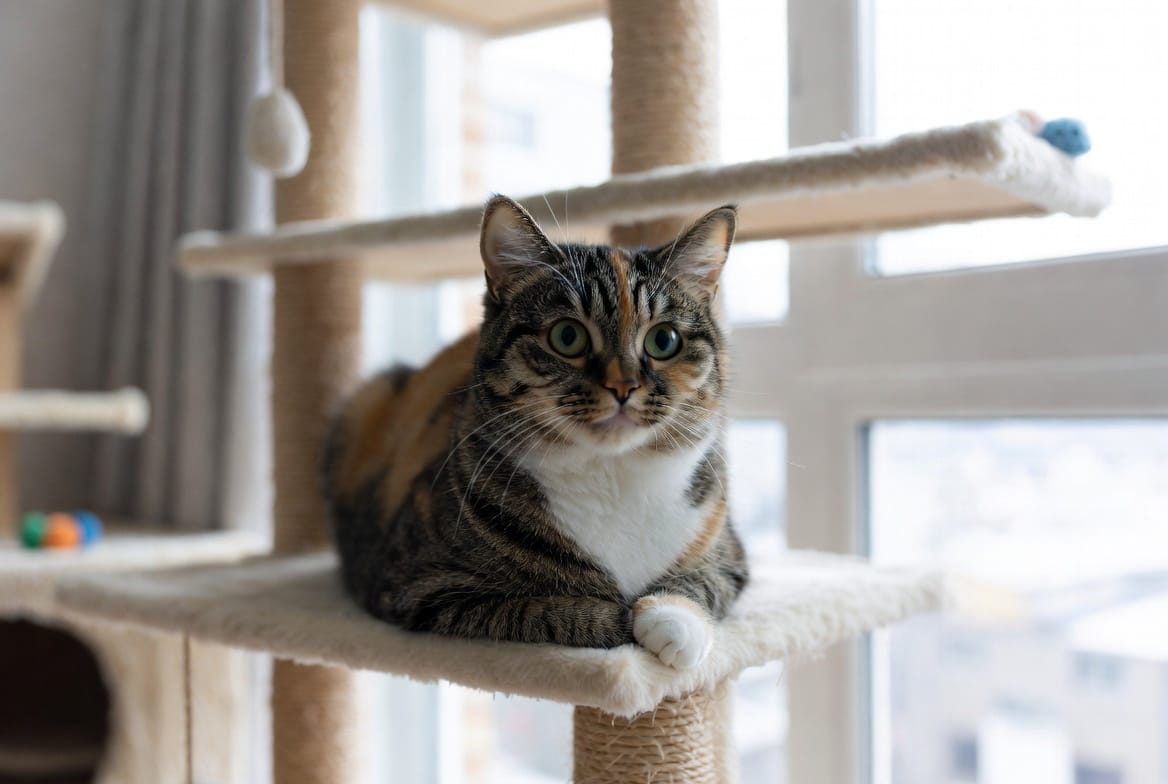
🌍 Overview
The domestic shorthair is not a specific breed but a mixed-breed cat with a short coat - the most common cat type in the world, accounting for the vast majority of the global domestic cat population estimated at 600 million. Descended from the African wildcat (Felis lybica), cats were first domesticated in the Fertile Crescent of the Middle East around 10,000 years ago, initially tolerated near grain stores for rodent control before becoming true companions.
📋 Quick Facts
Native Range
Descended from African wildcat (Felis lybica); domesticated in the Fertile Crescent
Natural Habitat
Fully domesticated; feral populations exist globally
Adult Size
9-10 inches at shoulder; 8-10 lbs (varies widely)
Wild Diet
(Ancestral) Small rodents, birds, insects, and lizards
Wild Lifespan
UK primary-care records give crossbred cats a life expectancy at birth of 11.89 years, against 11.74 for all cats; females average 12.51 and males 11.18. Outdoor and feral cats fare far worse at 2-5 years
Conservation Status
Not applicable (domesticated)
📜 History
The oldest direct evidence is a grave. Archaeologists at Shillourokambos on Cyprus found a complete cat skeleton buried beside a human around 7500 BC, which points to taming by early Neolithic farming communities. Ancient DNA work published in 2017 traced the spread that followed along shipping lanes: the Egyptian maternal lineage turns up at the Viking trading port of Ralswiek on the Baltic between the seventh and eleventh centuries AD, and medieval seafarers were required to carry cats aboard. The same study found that the blotched tabby marking now carried by most house cats appears no earlier than the medieval period, evidence that breeding cats for appearance is only a few centuries old.
⚖️ Compare
Domestic Shorthair
Human
Adult Size
9-10 inches at shoulder; 8-10 lbs (varies widely)
5-6 feet (150-185 cm); ~135-200 lbs
Wild Lifespan
UK primary-care records give crossbred cats a life expectancy at birth of 11.89 years, against 11.74 for all cats; females average 12.51 and males 11.18. Outdoor and feral cats fare far worse at 2-5 years
~73 years (global average)
Wild Diet
(Ancestral) Small rodents, birds, insects, and lizards
Omnivorous - eats just about anything
Native Range
Descended from African wildcat (Felis lybica); domesticated in the Fertile Crescent
Global - originated in Africa roughly 300,000 years ago
Natural Habitat
Fully domesticated; feral populations exist globally
Everywhere from arctic tundra to tropical megacities
Conservation Status
Not applicable (domesticated)
Least Concern (8+ billion and counting)
🧠 Test Yourself
What's the Domestic Shorthair's native range?
⚖️ Legal Guide
Subscribe - it's free
New animal facts and care guides straight to your inbox. No spam. 🐾
🩺 Health and More
🐈 Cat Enrichment: Five Pillars, and Most Homes Miss the Second One
🧬 What a Pet DNA Test Actually Tells You
🫘 Kidney Disease in Cats: What the Numbers Actually Mean
🫀 Cardiomyopathy in Cats and Dogs: HCM, DCM and What They Mean
⚖️ Body Condition Score: How to Tell if Your Pet Is Actually Overweight
🦷 Dental Disease: Why White Teeth Do Not Mean a Healthy Mouth
🤓 Did You Know?
Nobody knew what gene made cats orange until 2025, when two teams published the answer simultaneously: a roughly 5 kb deletion in an intron of ARHGAP36 on the X chromosome. No other species has a mutation in that gene causing it to be expressed in pigment cells, so sex-linked orange as cats do it occurs only in cats.
Explore More