Cherry Shrimp
Neocaridina davidi
On This Page▾
🌍 Overview
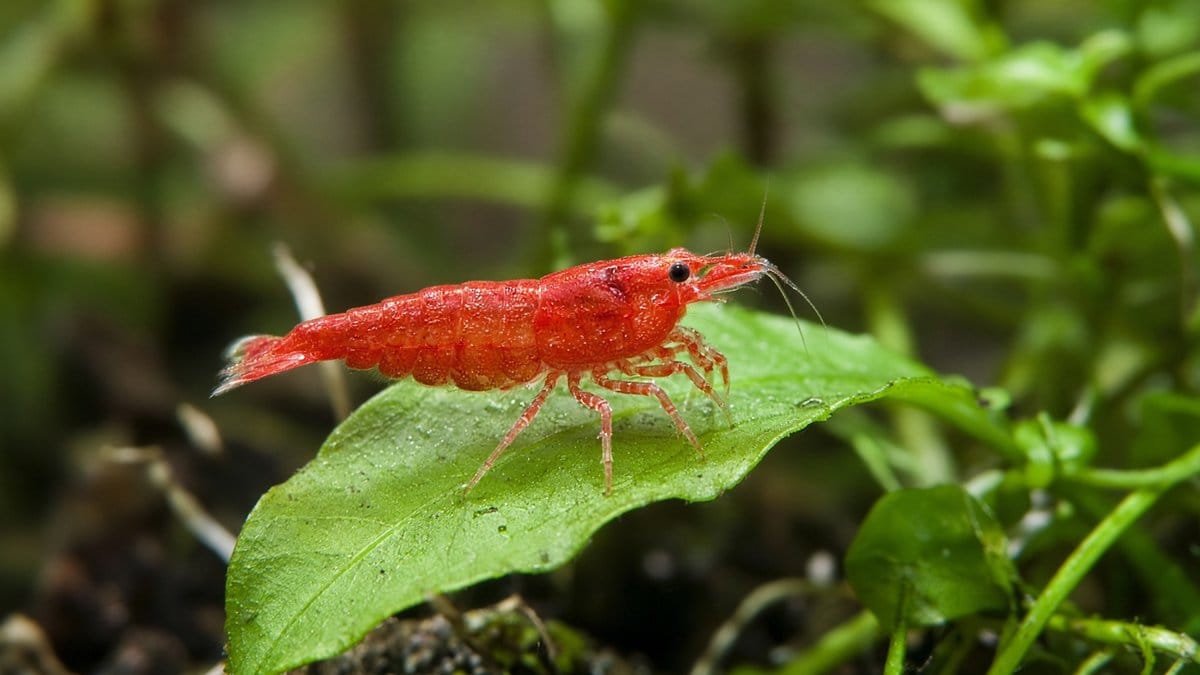
The cherry shrimp is one of the most popular freshwater aquarium shrimp species in the hobby, prized for breeding readily in plain freshwater and for the huge range of selectively bred colors developed from a single dull, translucent wild form. Native to streams and rivers in Taiwan and eastern China, wild cherry shrimp are a camouflaged greenish-brown, nothing like the vivid reds, blues, and yellows sold in stores today. They spend their days grazing biofilm and algae off any surface they can reach, doing genuine cleanup work in a planted tank while asking for almost nothing in return.
📋 Quick Facts
Native Range
Taiwan and eastern China
Natural Habitat
Streams, rivers, ponds, and lakes with dense vegetation, leaf litter, and moderate current
Adult Size
Up to about 1.5 inches (4 cm); females larger than males
Wild Diet
Biofilm, algae, and detritus grazed from submerged surfaces (does not eat live plants)
Wild Lifespan
1-2 years
Conservation Status
Not formally assessed (IUCN); wild populations not considered at risk
📜 History
Eugène-Louis Bouvier described the shrimp in 1904 as Caridina davidi, from Chinese material, naming it for Armand David, the French missionary naturalist who collected widely across China. For most of the following century it was buried under other names: Caridina denticulata sinensis in 1918, then Neocaridina denticulata sinensis, then Neocaridina heteropoda in 2002, which is the label the first wave of Western keepers knew it by. Taxonomic work in the 2010s established Bouvier's davidi as the valid name, which is why older aquarium books and current stock lists disagree. Aquarium releases have since seeded the shrimp into waterways well outside Asia, and the feral animals often carry the same selectively bred colors sold in shops.
⚖️ Compare
Cherry Shrimp
Human
Adult Size
Up to about 1.5 inches (4 cm); females larger than males
5-6 feet (150-185 cm); ~135-200 lbs
Wild Lifespan
1-2 years
~73 years (global average)
Wild Diet
Biofilm, algae, and detritus grazed from submerged surfaces (does not eat live plants)
Omnivorous - eats just about anything
Native Range
Taiwan and eastern China
Global - originated in Africa roughly 300,000 years ago
Natural Habitat
Streams, rivers, ponds, and lakes with dense vegetation, leaf litter, and moderate current
Everywhere from arctic tundra to tropical megacities
Conservation Status
Not formally assessed (IUCN); wild populations not considered at risk
Least Concern (8+ billion and counting)
🧠 Test Yourself
What's the Cherry Shrimp's native range?
🤩 Fun Facts
🦐 Recycling Its Own Shell
After molting, a cherry shrimp will turn around and eat its own just-shed exoskeleton, reclaiming the calcium and minerals already locked inside it before they go to waste. Experienced keepers leave a fresh molt in the tank for a day or two rather than removing it, giving the soft new shell underneath a real head start on hardening.
Subscribe - it's free
New animal facts and care guides straight to your inbox. No spam. 🐾
📰 Deep Dive
🦐 How Much Does Cherry Shrimp Ownership Really Cost?
🦐 Cherry Shrimp Aren't Handled at All, But Transfers Deserve Real Care
🦐 Common Cherry Shrimp Health Issues (And the One Chemical That Kills Them Fastest)
🦐 Cherry Shrimp Tank Setup: Size, Hard Water, and a Gentle Sponge Filter
🦐 Cherry Shrimp Feeding: Diet, Portions, and the Overfeeding Trap
🦐 Cherry Shrimp Enrichment: Surfaces to Graze, Not Food to Add
🩺 Health and More
🦠 How to Cycle a Fish Tank, Start to Finish: Fishless and Fish-In
🧽 Aquarium Filtration: How It Actually Works and How to Maintain It
🪣 Aquarium Water Changes: How Much, How Often, and What the Number Is For
🐟 Aquarium Stocking and Tankmates: How Many Fish, and Which Ones Go Together
🦐 Shrimp Molting: What a Normal Molt Looks Like, and the White Ring That Means It Failed
🩺 Fish Quarantine and Treatment: The Hospital Tank Guide
🤓 Did You Know?
Every color of cherry shrimp in the hobby, from clear to fire-engine red to jet black, is the exact same species. Neocaridina davidi's natural wild coloring is actually a dull, camouflaged greenish-brown; decades of selective breeding by hobbyists produced the entire modern color palette, right down to the graded 'Fire Red' and 'Painted Fire Red' tiers sold today.
Explore More