Fire-Bellied Toad Enclosure Setup: Half Fish Tank, Half Terrarium
On This Page▾

Fire-bellied toads need a different kind of setup than most amphibians, real aquatic filtration matters here in a way it doesn't for a more purely terrestrial species.
Enclosure Size
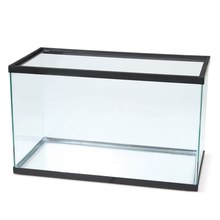
A 10 gallon tank works for one to three toads, this is a social species that can be kept in a small group of its own kind. Larger is better if you're keeping more. A tightly fitting screen lid is essential, fire-bellied toads are strong jumpers and genuine escape artists.
The Semi-Aquatic Layout
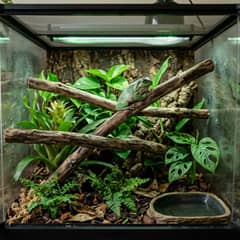
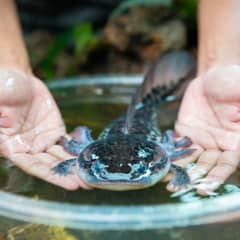
Build roughly half land, half water, a true paludarium setup, or alternatively an all-water base with floating cork bark or flat rocks providing land access points. Water should be deep enough for your toads to swim, sloping gradually to about 3 inches, deeper if you want, with easy access in and out. PetMD's sheet puts the water at 1 to 2 inches, which is the floor for a land-heavy layout; this is a toad that swims, so give it the 3. This semi-aquatic middle ground is worth comparing against a fully aquatic species like the axolotl, which never leaves the water and needs an entirely submerged, chilled tank rather than a part-land setup.
Temperature
75 to 78°F through the day, dropping at night. Treat 65°F as the floor and 82°F as the hard ceiling. Most rooms at normal temperature need no supplemental heat at all. If you do need a heat source because your space runs cold, a low-wattage bulb or a thermostat-controlled under-tank heater works, avoid overheating this species entirely.
Humidity
High, and largely self-maintaining given the water section already built into the enclosure. Light misting helps if needed, but the aquatic portion does most of the work here.
This toad needs no heater in most rooms. Its ceiling is 82°F, so a warm summer room is closer to a danger for it than a cool one.
Substrate
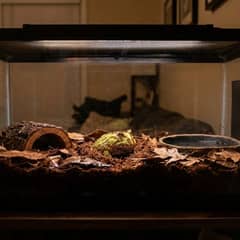
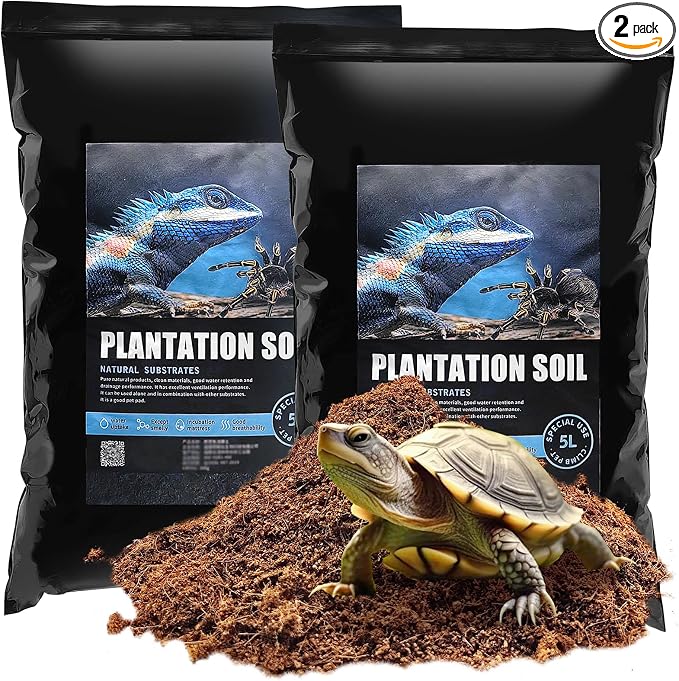
Coconut fiber or a naturalistic soil blend for the land portion. For the water section, use no substrate at all, or large smooth river rock or slate, never small gravel, which can be swallowed and cause impaction. Skip mealworms and other hard-shelled feeders too, for the same reason: impaction is what both bans are about.
Diet Basics
Live crickets make up the majority of the diet, with waxworms, earthworms, blackworms, small silkworms, dubia roach nymphs and black soldier fly larvae substituted in every few feedings for variety. Skip mealworms and the other hard-shelled feeders for the impaction reason above.
Two to six food items per toad every two to three days works well for an adult, with PetMD's once or twice a week the lean end of that same range, and juveniles are fed daily in smaller quantities. A practical ceiling either way is what the toad clears in about 15 minutes. Gut-load feeders for at least 24 hours before they go in, then dust them with a calcium and vitamin D supplement at every feeding session, adding a multivitamin once or twice a week.
Water Quality: The Part That Matters Most
This is the defining requirement for this species, more important than temperature, substrate, or lighting combined. Always dechlorinate tap water with a reptile-safe conditioner before it goes in the tank. Run a small filter in the water section, or commit to frequent partial water changes, up to half the water weekly if you're not filtering, to keep ammonia under control. Poor water quality is directly responsible for red leg syndrome, and treating this water section with the same care you'd give a fish tank is really the whole game here.
Lighting
Low-level UVB offers some benefit though isn't strictly required for this species. If used, a low-output bulb in the 5 to 7% range positioned 8 to 13 inches above the substrate works well.
The Non-Obvious Requirement: Never House With Other Species
This species' skin toxins mean fire-bellied toads should only ever be housed with their own kind, never mixed with other amphibian or reptile species in a shared enclosure.
Fire-bellied toads are part of a four-species comparison, Green Anole, Argentine Tegu, Fire-Bellied Toad & Tiger Salamander compared, which stacks the setup demands against three very different pets.
Sources & Further Reading
❓ Frequently Asked Questions
What size enclosure does a fire-bellied toad need?
10 gallons covers one to three toads, since this is a social species that does fine in a small group of its own kind. Scale up for more. The screen lid has to fit tightly: they are strong jumpers and genuine escape artists.
What does the semi-aquatic layout look like?
Roughly half land, half water, a true paludarium, or an all-water base with floating cork bark or flat rocks as land access points. The water needs to be deep enough for the toads to swim, sloping to about 3 inches, with easy access in and out.
What temperature and humidity does a fire-bellied toad need?
75 to 78°F through the day, dropping at night, with 65°F the floor and 82°F the hard ceiling, and most rooms at normal temperature need no supplemental heat at all. Humidity stays high and is largely self-maintaining given the water section already built into the enclosure.
What substrate is safe for a fire-bellied toad tank?
Coconut fiber or a naturalistic soil blend on the land side. In the water, either bare or smooth river rock or slate in large pieces, never small gravel, which can be swallowed and cause impaction.
How do I keep the water section safe for a fire-bellied toad?
Dechlorinate tap water with a reptile-safe conditioner before it goes in. Then either run a small filter in the water section or do frequent partial changes, up to half the water weekly without one, to hold ammonia down.
Does a fire-bellied toad need UVB lighting?
Not strictly required, though low-level UVB offers some benefit. If you use it, a low-output bulb in the 5 to 7% range, 8 to 13 inches above the substrate, works.
📰 More on the Fire Bellied Toad
📘 Fire Bellied Toad care guide
🐸 How Much Does a Fire-Bellied Toad Really Cost?
🐸 Fire-Bellied Toads Have Genuinely Toxic Skin, Here's What That Means
🐸 Common Fire-Bellied Toad Health Issues (Water Quality Is Everything)
🐸 Fire-Bellied Toad Feeding: Live Prey It Has to Leap For, Two to Six Items Every Few Days, and Nothing Hard-Shelled
🐸 10 Surprising Fire-Bellied Toad Facts
🛒 Recommended Gear
As an Amazon Associate, we earn from qualifying purchases through the links above - at no extra cost to you.
Written by Michael Ryan
Mike keeps two rescued bearded dragons, Dex and Cera, and writes the care guides on BeastlyFacts from his own research and mistakes. He is not a veterinarian.
More about Michael Ryan →Comments
No comments yet - be the first!