Fire-Bellied Toad
Amphibians
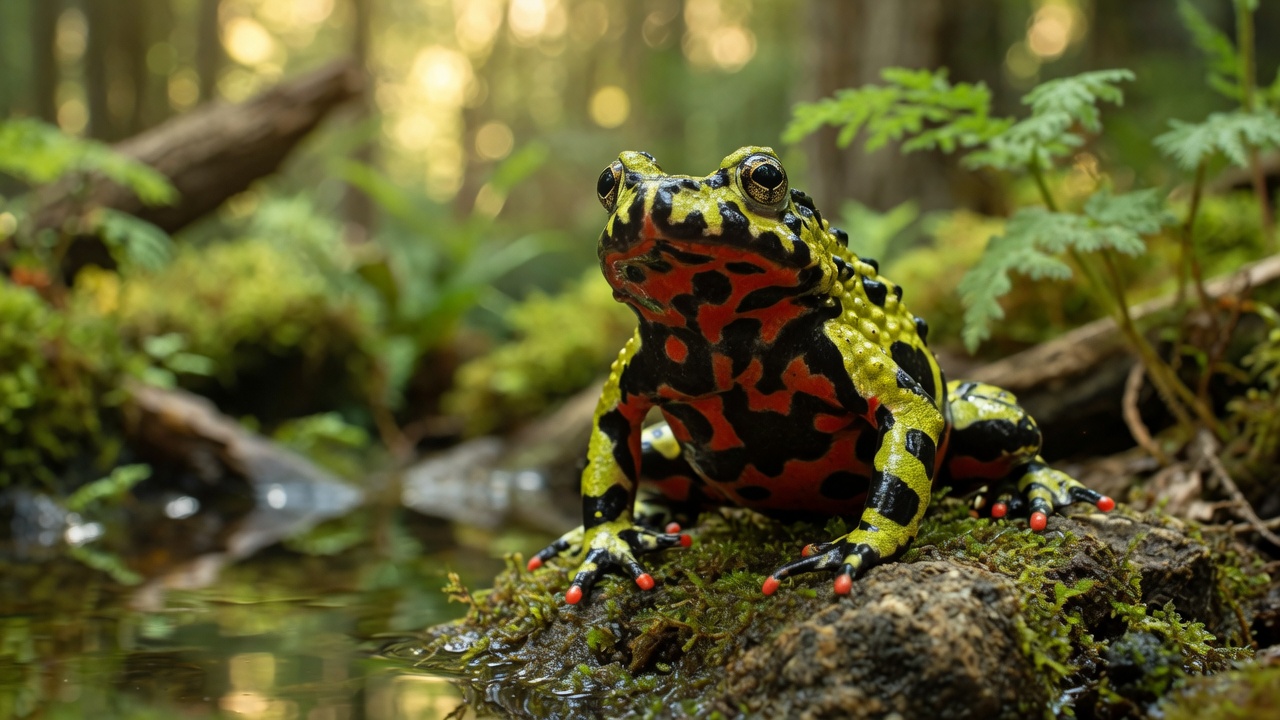
The vivid red and black toad that warns predators of its mild toxicity!
🤓 Did you know? When threatened, fire-bellied toads perform the Unkenreflex: they arch their backs and flip their limbs upward to display the bright red and black warning coloration on their bellies. This 'unken' pose is a classic example of aposematism, advertising: 'I am toxic, do not eat me!'
🏠 Housing & Setup
A paludarium - a terrarium with both land and water sections - is the ideal and most natural setup for fire-bellied toads. A 20-gallon tank with approximately 60% water section and 40% land section works well for a group of 3 to 5 adults. The water section should be 3 to 4 inches deep with a small aquarium filter to keep the water clean between changes. The land section should feature moist coconut fiber substrate, sheet moss, and live or quality artificial plants.
Temperature is critically important: fire-bellied toads prefer 65 to 75 degrees F and are distinctly cool-temperature amphibians. Temperatures above 80 degrees F cause significant and rapid heat stress. In warm climates, keeping them cool requires an air-conditioned room or a small fan directed at the tank. They do not require supplemental heating in most temperate home environments.
Humidity of 70 to 80% is appropriate. The water section naturally maintains this. Mist the land section lightly in the evenings. Use only dechlorinated or reverse-osmosis water for both the water section and misting - frogs absorb everything through their permeable skin.
🥗 Diet & Feeding
Fire-bellied toads eat small live insects. Appropriately-sized crickets (no larger than the space between the toad's eyes) are the most practical staple feeder. Fruit flies are appropriate for juveniles and very small adults. Dubia roaches, small mealworms, and black soldier fly larvae add variety. Waxworms are an occasional treat - too high in fat for regular feeding.
Feed every 2 to 3 days. Dust all feeders with calcium w/D3 powder at every other feeding session, and with a reptile multivitamin once weekly. Gut-load insects 24 to 48 hours before offering: feed the crickets or roaches collard greens, carrot, and commercial gut-load powder so the nutritional value is passed to the toad.
One natural advantage of the paludarium setup: toads will actively hunt small aquatic invertebrates (daphnia, blackworms, small bloodworms) in the water section. Adding these to the water occasionally provides excellent naturalistic enrichment and supplemental nutrition.
🎮 Enrichment & Handling
Fire-bellied toads are unusual among frogs for being diurnal - they are active and visible during daylight hours. This makes them far more engaging display animals than most nocturnal frog species, which spend their days hidden. A group of fire-bellied toads in a well-planted paludarium with floating cork bark, aquatic plants, and varied terrain is genuinely beautiful and actively interesting to watch.
Provide floating cork bark platforms and submerged branches at different heights in the water section for toads to climb onto and bask. Dense live or artificial plants on the land section give the toads areas to hide between their active periods. Leaf litter on the land section adds natural texture and encourages rooting behavior.
They are social and do well in same-species groups of 3 to 6 individuals. Their characteristic "unken" warning-display behavior (arching the back to show the red belly) is one of the most distinctive behaviors in amphibian keeping. They live 10 to 15 years with good care, making them a long-term companion species.
💊 Health & Common Issues
Fire-bellied toads produce mild skin toxins (pumiliotoxins) - not dangerous in normal contact, but always wash hands thoroughly after handling and before touching eyes, mouth, or face. They should not be housed with other amphibian species: not with fire-bellied newts (common mistake, different care requirements and potential toxin incompatibility), not with tree frogs, and not with any species that might be a prey item.
Water quality is the primary health variable. The aquatic section must be filtered and changed regularly: perform 25% water changes weekly using dechlorinated or RO water. Dirty water causes red-leg syndrome (bacterial infection causing redness, lethargy, and ulceration of the legs and belly). Treat red-leg under veterinary guidance with antibiotics and improved water quality.
Chytrid fungus (Bd) quarantine protocols apply to all new animals: quarantine any new toad for 30 to 60 days in a separate enclosure before introduction. Watch for lethargy, excessive skin shedding, and loss of appetite as early illness signs. An exotic/amphibian vet should be identified before acquiring this species.
✅ Complete Care Checklist
Cost Builder
Uncheck anything you already have to see your real total.
One-Time Setup
Ongoing (Per Year)
Setup total
$170-$330
Per year after
$90-$165
Rough estimates to help you plan - actual prices vary by region and retailer. Underlined items are paid Amazon links - we may earn a commission at no extra cost to you.
❓ Frequently Asked Questions
Are fire-bellied toads poisonous?
They produce mild skin toxins (pumiliotoxins) as a chemical defense. These are not dangerous to healthy humans in normal contact - touching a fire-bellied toad and then touching your eyes or mouth would cause irritation, but skin contact alone is low-risk. Always wash hands thoroughly immediately after handling, and avoid touching eyes, mouth, or face before doing so. The toxins are far more dangerous to other animals: never house fire-bellied toads with other amphibian species, and keep them away from other pets.
What is the unken reflex?
The unken reflex (Unkenreflex in German, where the behavior was first scientifically named) is the defensive posture fire-bellied toads perform when threatened: they arch their back upward and flip their feet and hands outward to expose the bright red and black warning coloration on their belly. This is a textbook example of aposematism - advertising toxicity through conspicuous coloration. It tells predators 'I taste terrible and will make you sick.' A fire-bellied toad performing the unken reflex in captivity usually means it has been startled by a sudden reach or movement.
What temperature do fire-bellied toads need?
65 to 75 degrees F is the ideal range - they are distinctly cool-temperature amphibians. Temperatures above 80 degrees F cause rapid and serious heat stress: hyperactivity, labored breathing, attempting to climb out of the enclosure, and deteriorating health. In warm climates, keeping fire-bellied toads requires either air conditioning or a cool basement. They typically do not need supplemental heating in temperate home environments. Never use under-tank heaters, heat lamps, or place the enclosure in direct sunlight.
Can fire-bellied toads be kept in groups?
Yes - they are one of the few social frog species that genuinely benefit from group housing. A group of 3 to 6 same-species individuals in a proper paludarium setup is natural and engaging. Do not mix them with other frog or amphibian species: not with fire-bellied newts (common mistake, different care requirements and potential toxin incompatibility), not with tree frogs, not with any species that could be perceived as prey or competition. Within-species, same-size groups are stable and actively enjoyable to observe.
How long do fire-bellied toads live?
10 to 15 years with proper care - a significantly longer lifespan than many keepers expect. The key factors for longevity are: consistent cool temperature (never above 80°F), pristine water quality in the aquatic section (25% water changes weekly using dechlorinated or RO water), a varied gut-loaded insect diet with calcium supplementation, and prompt attention to any signs of red-leg syndrome or other illness. Annual exotic vet checkups are worthwhile given their long potential lifespan.
Subscribe - it's free
New care guides straight to your inbox. No spam. 🐾