Fire-Bellied Toad
Bombina orientalis
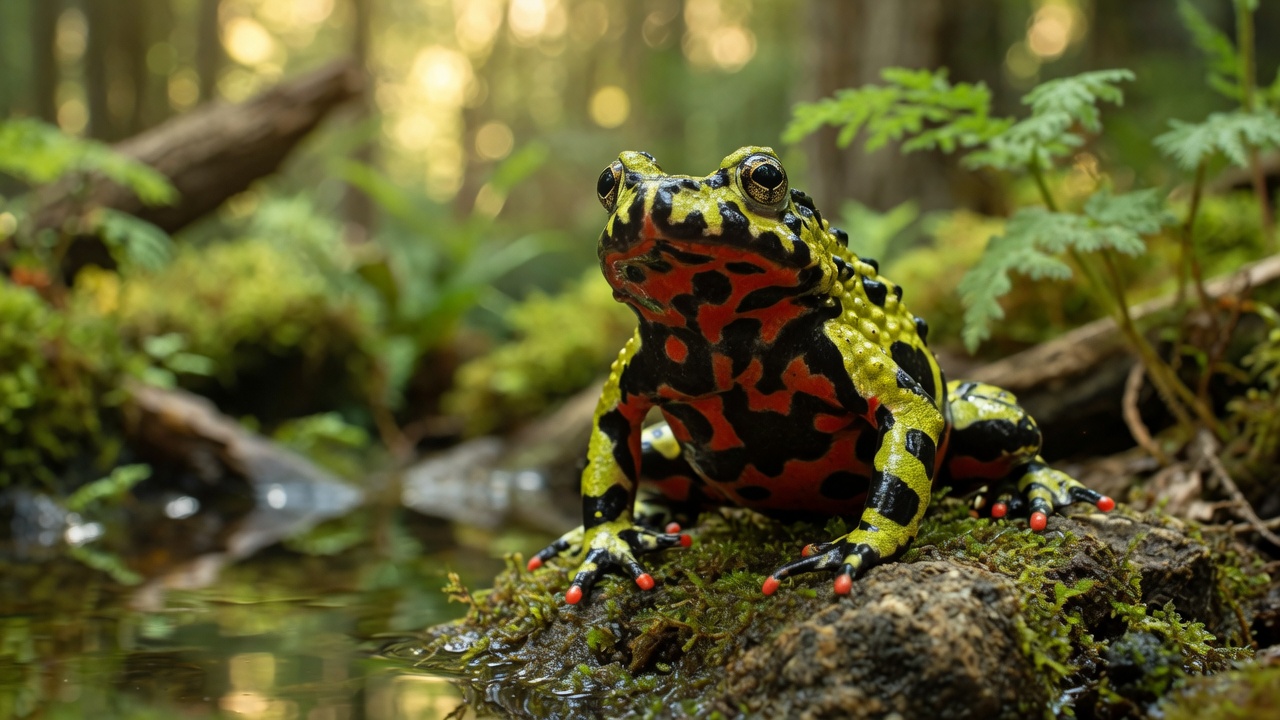
🌍 Overview
The Oriental fire-bellied toad is native to northeastern China, Korea, and the Russian Far East, where it inhabits slow-moving streams and mountain ponds. Its vivid red and orange belly serves as aposematic warning coloration - signaling to predators that it is toxic. When threatened, it arches its back to display this warning coloration (the unken reflex). Fire-bellied toads produce skin secretions toxic enough to irritate mucous membranes and eyes.
📋 Quick Facts
Native Range
Northeastern China, Korea, and Russian Far East
Natural Habitat
Mountain streams, ponds, marshes, and wet meadows
Adult Size
1.5-2 inches (4-5 cm)
Wild Diet
Insects, worms, small crustaceans, and aquatic invertebrates
Wild Lifespan
12-15 years (up to 20+ years in captivity)
Conservation Status
Least Concern (IUCN)
⚖️ Compare
Fire-Bellied Toad
Human
Adult Size
1.5-2 inches (4-5 cm)
5-6 feet (150-185 cm); ~135-200 lbs
Wild Lifespan
12-15 years (up to 20+ years in captivity)
~73 years (global average)
Wild Diet
Insects, worms, small crustaceans, and aquatic invertebrates
Omnivorous - eats just about anything
Native Range
Northeastern China, Korea, and Russian Far East
Global - originated in Africa roughly 300,000 years ago
Natural Habitat
Mountain streams, ponds, marshes, and wet meadows
Everywhere from arctic tundra to tropical megacities
Conservation Status
Least Concern (IUCN)
Least Concern (8+ billion and counting)
🧠 Test Yourself
What's the Fire-Bellied Toad's native range?
Subscribe - it's free
New animal facts and care guides straight to your inbox. No spam. 🐾
🤓 Did You Know?
When threatened, fire-bellied toads perform the Unkenreflex: they arch their backs and flip their limbs upward to display the bright red and black warning coloration on their bellies. This 'unken' pose is a classic example of aposematism, advertising: 'I am toxic, do not eat me!'
Explore More