Madagascar Hissing Cockroach
Gromphadorhina portentosa
On This Page▾
🌍 Overview
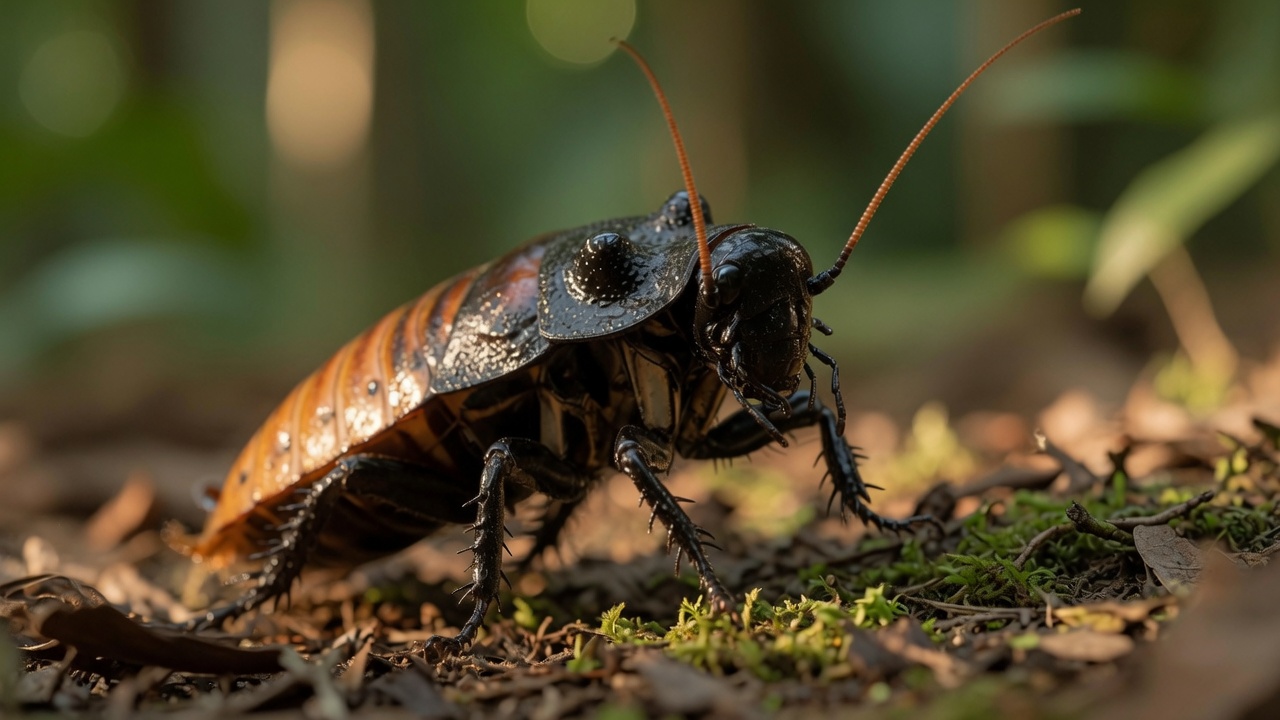
The Madagascar hissing cockroach is one of the largest cockroach species in the world and the only known hissing insect that produces sound through modified spiracles (breathing pores) rather than wing rubbing. Endemic to Madagascar, they are detritivores that play an important ecological role in forest decomposition. Males display prominent pronotal horns used in shoving contests with rival males. In captivity they are odorless, wingless, and remarkably robust.
📋 Quick Facts
Native Range
Madagascar
Natural Habitat
Tropical forest floor; rotting logs and leaf litter
Adult Size
2-4 inches (5-10 cm)
Wild Diet
Decaying plant matter, leaf litter, and fruit
Wild Lifespan
2-5 years
Conservation Status
Not formally assessed (IUCN); considered stable
📜 History
Hermann Schaum named the species Hormetica portentosa in 1853, working from material Wilhelm Peters had collected and deposited in Berlin, and describing it from a specimen taken at Madagascar's Bay of Saint-Augustin. Carl Brunner von Wattenwyl decided in 1865 that it warranted a genus of its own and built Gromphadorhina around it. Its second career came through television and classrooms: it appeared on Late Night with David Letterman in 1984 and later on Fear Factor, and the Bronx Zoo has run a Valentine's Day cockroach naming fundraiser since 2011. Whether any given colony holds that species at all is another question, since dealers routinely mix it with two Madagascan lookalikes, Gromphadorhina oblongonota and Gromphadorhina picea.
⚖️ Compare
Madagascar Hissing Cockroach
Human
Adult Size
2-4 inches (5-10 cm)
5-6 feet (150-185 cm); ~135-200 lbs
Wild Lifespan
2-5 years
~73 years (global average)
Wild Diet
Decaying plant matter, leaf litter, and fruit
Omnivorous - eats just about anything
Native Range
Madagascar
Global - originated in Africa roughly 300,000 years ago
Natural Habitat
Tropical forest floor; rotting logs and leaf litter
Everywhere from arctic tundra to tropical megacities
Conservation Status
Not formally assessed (IUCN); considered stable
Least Concern (8+ billion and counting)
🧠 Test Yourself
What's the Madagascar Hissing Cockroach's native range?
⚖️ Where it is legal
9 US jurisdictions restrict this species, from outright bans to permits. Every one quotes the rule it comes from.
⚖️ Legal Guide
Subscribe - it's free
New animal facts and care guides straight to your inbox. No spam. 🐾
📰 Deep Dive
🪳 How Much Does a Madagascar Hissing Cockroach Really Cost?
🪳 How to Handle a Madagascar Hissing Cockroach (And How That Hiss Actually Works)
🪳 Common Madagascar Hissing Cockroach Health Issues (Prevention Does Almost All the Work)
🪳 Madagascar Hissing Cockroach Enclosure Setup: Humidity, Substrate, and Keeping Them From Climbing Out
🪲 Madagascar Hissing Cockroach Feeding: Schedule, Diet, and Why They Stop Eating
🪳 Hissing Cockroach Enrichment: Somebody Built Them a Welfare Framework
🩺 Health and More
☠️ Household Pesticides and Your Invertebrate Pet: The Hidden Hazard
📦 Rehousing an Invertebrate: Method, Timing, and Urticating Hair First Aid
🕷️ Invertebrate Housekeeping: Quarantining a New Arrival, Cleaning the Enclosure, and Finding an Escapee
📦 Invertebrate Emergency Plan: Power Outages, Travel, and Shipping
🔍 Four Animals, Four First Impressions That Are Wrong
🤓 Did You Know?
Madagascar hissing cockroaches are one of the few insect species where the father plays an active role in rearing offspring. Males guard and protect the female and young after birth, and juveniles stay with the family group for weeks.
Explore More