German Shepherd
Canis lupus familiaris
On This Page▾
🌍 Overview
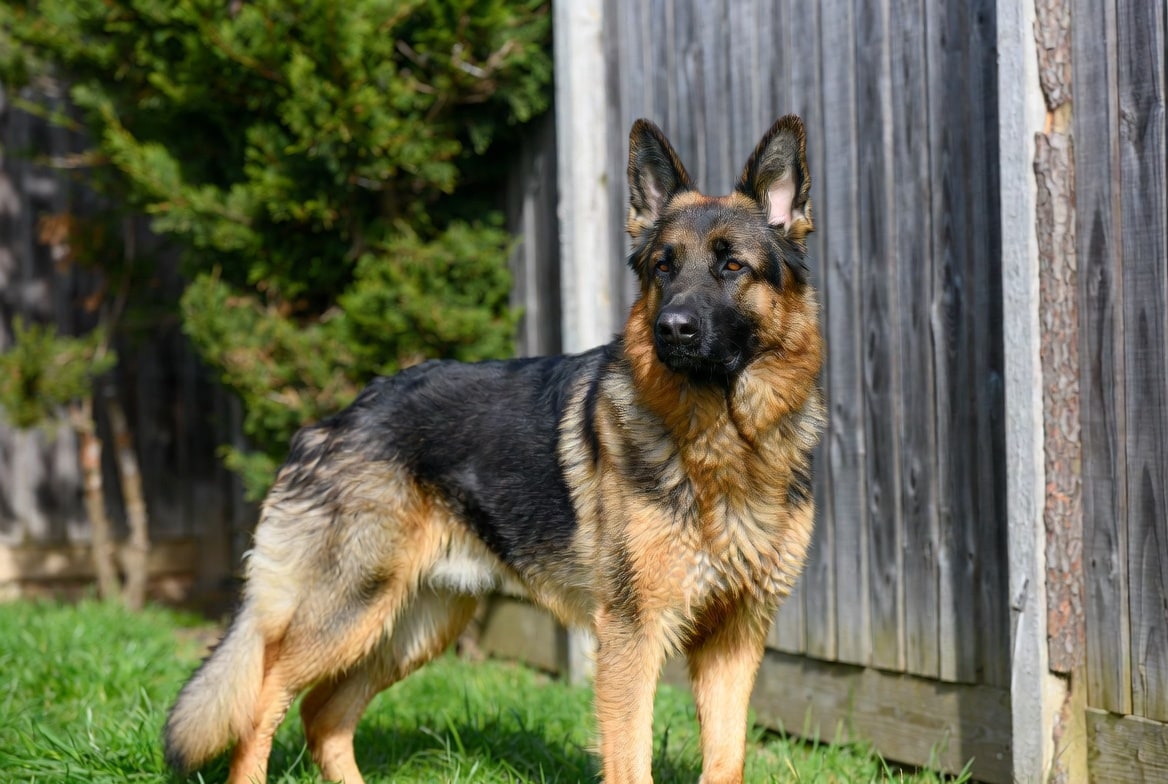
The German shepherd was developed in late 19th-century Germany by cavalry captain Max von Stephanitz, who sought to create the ideal herding and working dog through selective breeding. Their intelligence, trainability, and work drive made them the go-to military and police dog of the 20th century - they served in both World Wars and remain the most common police dog breed globally. The breed's extraordinary popularity has unfortunately created significant health challenges in poorly bred lines.
📋 Quick Facts
Native Range
Breed origin: Germany
Natural Habitat
Fully domesticated
Adult Size
22-26 inches at shoulder; 50-90 lbs
Wild Diet
Fully domesticated
Wild Lifespan
12-14 years per the AKC, but UK primary-care records covering 12,146 dogs give a median of 10.3 years, 11.1 for females and 9.7 for males
Conservation Status
Not applicable (domesticated breed)
📜 History
The breed has a documented first dog. In 1899 von Stephanitz bought a four-year-old named Hektor Linksrhein at a dog show for 200 gold marks, renamed him Horand von Grafrath, and entered him as SZ1, the first record in the stud book of the breed club he founded that same year. Modern German Shepherds trace back to him, largely through his son Hektor von Schwaben. The breed also opened guide dog work in the United States: Dorothy Harrison Eustis trained a shepherd named Buddy in Switzerland for Morris Frank, who arrived in New York with her on June 11, 1928. Their street-crossing demonstration for reporters led to The Seeing Eye, incorporated in Nashville on January 29, 1929.
⚖️ Compare
German Shepherd
Human
Adult Size
22-26 inches at shoulder; 50-90 lbs
5-6 feet (150-185 cm); ~135-200 lbs
Wild Lifespan
12-14 years per the AKC, but UK primary-care records covering 12,146 dogs give a median of 10.3 years, 11.1 for females and 9.7 for males
~73 years (global average)
Wild Diet
Fully domesticated
Omnivorous - eats just about anything
Native Range
Breed origin: Germany
Global - originated in Africa roughly 300,000 years ago
Natural Habitat
Fully domesticated
Everywhere from arctic tundra to tropical megacities
Conservation Status
Not applicable (domesticated breed)
Least Concern (8+ billion and counting)
🧠 Test Yourself
What's the German Shepherd's native range?
Subscribe - it's free
New animal facts and care guides straight to your inbox. No spam. 🐾
🩺 Health and More
🐕 Dog Enrichment: Let Them Sniff, and the Dog Gets More Optimistic
🧬 What a Pet DNA Test Actually Tells You
👁️ Inherited Eye Disease: What Screening Actually Catches
🦴 Hip and Elbow Dysplasia: What the Grades Actually Mean
🐶 Bloat in Dogs: The Emergency Every Large-Breed Owner Should Know
🐕 Golden Retriever vs. German Shepherd: Which Family Dog Fits Your Life
🤓 Did You Know?
Female German Shepherds outlive males by 1.4 years. In 12,146 UK German Shepherds under primary veterinary care, median longevity was 11.1 years for females against 9.7 years for males, and males were recorded with aggression at more than twice the female rate, 6.75 percent against 2.78 percent. Sex is one of the strongest predictors of outcome in the breed.
Explore More