Angelfish
Pterophyllum scalare
On This Page▾
🌍 Overview
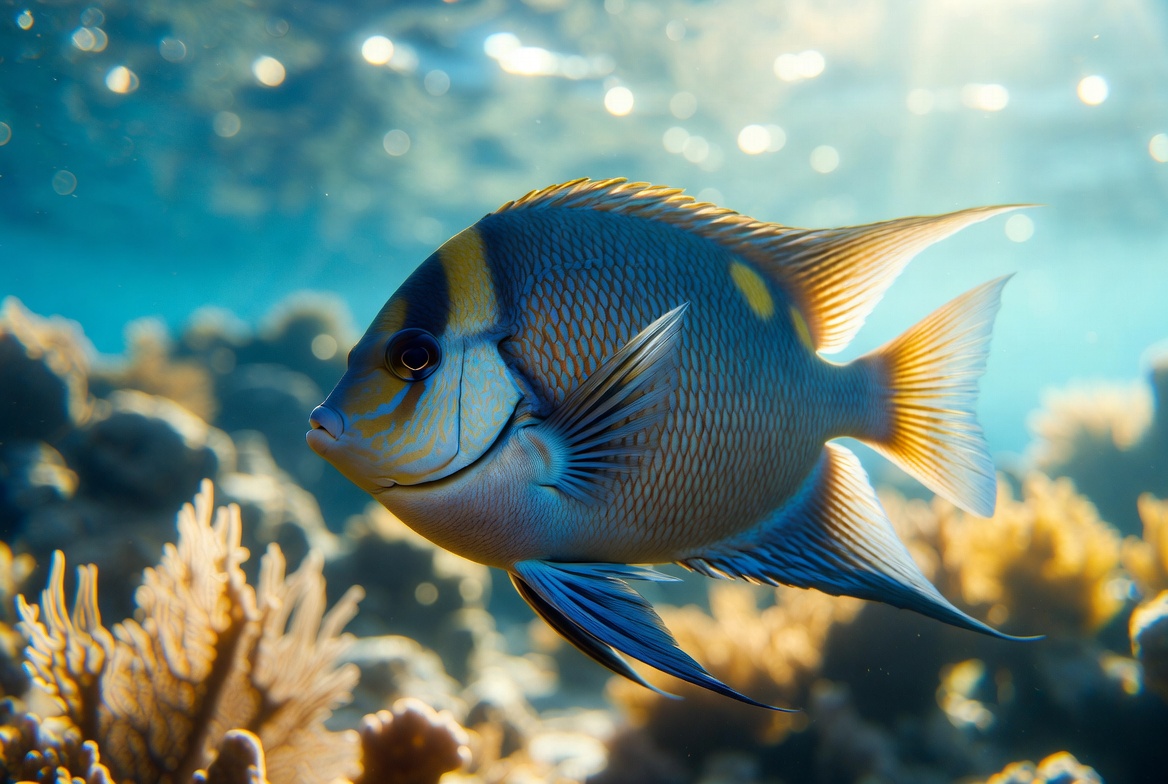
The freshwater angelfish is a cichlid native to the slow-moving tributaries and flooded forest of the Amazon Basin. Its tall, laterally compressed body is a natural adaptation for slipping between submerged roots and plant stems, effectively disguising it as a drifting leaf. Angelfish often form long-term monogamous breeding pairs and display cooperative biparental care of their eggs and fry, an unusually elaborate parenting behavior for a fish.
📋 Quick Facts
Native Range
Amazon Basin (Peru, Colombia, Brazil, Guyana)
Natural Habitat
Slow-moving tributaries, flooded forest, and blackwater streams
Adult Size
6 inches (15 cm) body; 8-10 inches (20-25 cm) including fins
Wild Diet
Small insects, crustaceans, zooplankton, and occasionally small fish
Wild Lifespan
Not well documented in the wild; 8 to 12 years is typical in a well-kept aquarium, up to around 15 under ideal conditions
Conservation Status
Not evaluated (widespread and common)
📜 History
The species reached print long before it reached aquariums. Ferdinand Schultze described it in 1823 from a specimen catalogued at the zoological museum of the Royal University of Berlin, filing it as Zeus scalaris among the marine dories, and it was shuffled through several other genera before Pterophyllum stuck. Live fish did not arrive in Europe until 1909, when C. Ziggelkow of Hamburg brought the first import into Germany. The angelfish then spent more than a century as a fixture of the hobby with its genome unread, until a high school student named Indeever Madireddy sequenced and assembled it on a community lab bench and published the result in October 2022.
⚖️ Compare
Angelfish
Human
Adult Size
6 inches (15 cm) body; 8-10 inches (20-25 cm) including fins
5-6 feet (150-185 cm); ~135-200 lbs
Wild Lifespan
Not well documented in the wild; 8 to 12 years is typical in a well-kept aquarium, up to around 15 under ideal conditions
~73 years (global average)
Wild Diet
Small insects, crustaceans, zooplankton, and occasionally small fish
Omnivorous - eats just about anything
Native Range
Amazon Basin (Peru, Colombia, Brazil, Guyana)
Global - originated in Africa roughly 300,000 years ago
Natural Habitat
Slow-moving tributaries, flooded forest, and blackwater streams
Everywhere from arctic tundra to tropical megacities
Conservation Status
Not evaluated (widespread and common)
Least Concern (8+ billion and counting)
🧠 Test Yourself
What's the Angelfish's native range?
Subscribe - it's free
New animal facts and care guides straight to your inbox. No spam. 🐾
📰 Deep Dive
🐠 How Much Does Angelfish Ownership Really Cost?
🐠 Angelfish Aren't Handled, But They Do Get Territorial
🐠 Common Angelfish Health Issues (And What Actually Prevents Them)
🐠 Angelfish Tank Setup: Height Matters More Than You'd Think
🐠 Angelfish Feeding: Schedule, Diet, and Why They Stop Eating
🐠 Angelfish Enrichment: The Study Found Group Size Did Not Matter
🩺 Health and More
🐠 Aquarium Power Outages, Transport, and Moving Your Fish: The Complete Plan
🦠 How to Cycle a Fish Tank, Start to Finish: Fishless and Fish-In
🧽 Aquarium Filtration: How It Actually Works and How to Maintain It
🪣 Aquarium Water Changes: How Much, How Often, and What the Number Is For
🐟 Aquarium Stocking and Tankmates: How Many Fish, and Which Ones Go Together
🧪 Freshwater pH, GH, and KH: Why Chasing a Number Backfires
🤓 Did You Know?
Angelfish are cichlids that often form long-term monogamous breeding pairs, and unlike most fish, both parents cooperatively guard their eggs and fry - fanning them with fresh water and defending the territory together. Their tall, laterally flattened body shape is a natural adaptation for slipping between roots and plant stems in flooded Amazon forest, effectively letting them disguise themselves as a drifting leaf.
Explore More