Polar Bear Week and the Fiber Optic Fur That Never Worked
On This Page▾

A polar bear has black skin under a coat that looks white, and the hairs that make up that coat are close to transparent when they lie flat. For years a tidy story linked those three facts together, and it ended up in physics textbooks before anyone thought to measure it.
The Fiber Optic Story
The idea grew out of a mid-1970s finding by zoologists in Guelph and Oslo that polar bear pelts reflect very little ultraviolet light. A team from the Boston area later proposed an explanation: the hairs were collecting ultraviolet light and channeling it down their length to the black skin, which absorbed it as heat. The bear, on this account, wore a coat of solar collectors.
The team did not test it. The idea traveled anyway, into the Christian Science Monitor, the New York Times and Time magazine, and into at least one physics textbook, which is where Daniel Koon, a physicist at St. Lawrence University, first came across it.
Koon and a student, Reid Hutchins, took hairs from a male polar bear at a zoo in Rochester, New York, and measured how much light traveled along a typical inch-long hair. Less than a thousandth of a percent of red light made it from one end to the other. Violet light fared far worse, and ultraviolet, the light the whole theory depended on, worst of all.
Koon published the result in Applied Optics in 1998 under the title "Is polar bear hair fiber optic?". In the visible range the hair lost 2 to 8 decibels per millimeter. A hair that loses that much light over a few millimeters is absorbing it, and it cannot be delivering any to the skin. The absorber is almost certainly keratin, the protein hair is made of. Keratin had already been proposed as the reason the pelt absorbs ultraviolet, and Koon's measurement fits.
Koon's own verdict on why the story lasted: people want to believe in the fantastic, and the fantastic is often accepted without being tested.
A Week Timed to Freeze-Up
Polar Bear Week is the first week of November. Polar Bears International created it and sets the exact dates each year, and it timed the week to the annual gathering of polar bears near Churchill, Manitoba, on the western shore of Hudson Bay.
The bears are there because they are waiting. Hudson Bay loses its ice entirely in summer, and a polar bear hunts seals from the ice. Through the ice-free months the bears come ashore and live mostly on stored fat. In the fall they gather near Churchill to wait for the ice to return, and once it does they go back out to hunt.
That ice-free stretch has grown by three to four weeks since the 1980s, and every extra week is drawn from the same fat reserve. The trend is not confined to Hudson Bay. Harry Stern and Kristin Laidre examined sea ice in all 19 polar bear subpopulation regions from 1979 to 2014 and found earlier spring retreat and later fall advance in every one of them, by roughly 3 to 9 days per decade at each end, with the number of ice-covered days falling by 7 to 19 days per decade.
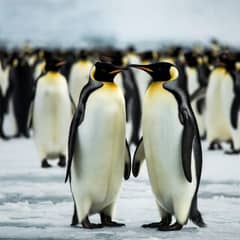
The narwhal lives on the same clock. It follows the ice into fjords as it retreats and back offshore as it returns, and at the other pole, whether an emperor penguin colony on fast ice gets a breeding season at all depends on the ice holding long enough.
What the Hudson Bay Count Shows
The Western Hudson Bay population, the Churchill bears, is one of the most closely studied in the world, with an aerial survey every five years. The estimates ran 949 bears in 2011, 842 in 2016 and 618 in 2021. The population was already considered to be in decline after the 2016 count, and the 2021 figure, released in late 2022, read as a steep further drop.
The picture has since grown more complicated. The neighboring Southern Hudson Bay population was surveyed at the same time, and it went the other way, from 780 bears in 2016 to 1,003 in 2021. Taken together the two came to 1,622 bears in 2016 and 1,621 in 2021, all but unchanged across the pair. Tracking data on collared bears points to the explanation for the Western drop: bears moving south into the neighboring area, likely drawn by ice that lingered there near the time of the survey.
So the 618 is a real count of the bears that were in Western Hudson Bay that summer, and it is far weaker evidence of bears dying than it first appeared. What it does show is how tightly the animals track ice. A pocket of late ice in one part of the bay can shift the count in another by hundreds of bears in a single season.
Both halves of the polar bear story went the same way. A tidy explanation for the fur reached textbooks before anyone measured a hair. One survey then read as a collapse before anyone tracked where the bears had gone. In both cases the measurement was less dramatic than the story and more useful, and the number that matters for the Churchill bears is still the one Polar Bear Week is timed to: the day the bay freezes.
Sources & Further Reading
Last reviewed 27 Oct 2026 · 5 sources
- Koon, D. W., "Is polar bear hair fiber optic?", Applied Optics 37(15):3198-3200 (1998), doi:10.1364/AO.37.003198
- Stern, H. L. and Laidre, K. L., "Sea-ice indicators of polar bear habitat", The Cryosphere 10:2027-2041 (2016), doi:10.5194/tc-10-2027-2016
- Government of Nunavut Department of Environment, Results of the 2021 survey and community consultations of the Western Hudson Bay polar bear subpopulation, Nunavut Wildlife Management Board meeting binder (October 2024)
- Rozell, N., "Debunking the myth of polar bear hair", Alaska Science Forum, University of Alaska Fairbanks Geophysical Institute (1998)
- Polar Bear Week, Polar Bears International
Frequently Asked Questions
When is Polar Bear Week?
The first week of November. Polar Bears International sets the exact dates each year and posts them on its Polar Bear Week page.
What color is a polar bear's skin?
Black. The coat over it looks white, and the hairs themselves are close to transparent, but the skin underneath is dark.
Is polar bear fur transparent?
Close to it. The hairs carry no pigment, and the coat looks white because they scatter light, the way snow does. They are not fiber optics, though: when that was measured in 1998, an inch of hair passed less than a thousandth of a percent of red light, and ultraviolet fared worse still.
Why do the Churchill polar bears come ashore?
Hudson Bay melts completely each summer, so the bears that hunt seals on its ice have to spend those months on land, living mostly off stored fat. In the fall they gather near Churchill to wait for the sea ice to come back so they can return to hunting.
On the animal calendar

Written by Michael Ryan
Mike keeps two rescued bearded dragons, Dex and Cera, and writes the care guides on BeastlyFacts from his own research and mistakes. He is not a veterinarian.
More about Michael Ryan →