10 Surprising Cuttlefish Facts

Cuttlefish are often overshadowed by octopuses, but they are every bit as fascinating and in some ways even more impressive. With lightning-fast camouflage and strange abilities, these masters of disguise have plenty of surprises. Here are ten facts worth knowing.
Their relatives in deep water push the same body plan somewhere else entirely, and our guide to the weirdest creatures in the deep sea covers the giant squid and its dinner-plate eyes.
-
They are masters of camouflage. Cuttlefish can change color, pattern, and skin texture in a fraction of a second to perfectly match their surroundings. Some can even make their skin look like moving sand or coral.
-
They have unique W-shaped pupils. Their eyes have a distinctive W-shaped pupil that helps them see well in varying light conditions and may improve depth perception and contrast detection. Strange eyes are something of a theme in the ocean, and our mantis shrimp vision guide covers a crustacean with 16 types of photoreceptor and the ability to read polarized light.
-
They also have three hearts and blue blood. Like their octopus relatives, cuttlefish have three hearts and copper-based blue blood. Two hearts serve the gills while the third pumps blood to the rest of the body. If that arrangement sounds strange, our deep dive into how the octopus uses all three of its hearts explains why the third one stops beating entirely whenever the animal swims.
-
They can hypnotize prey with color. Some cuttlefish use pulsing color patterns to confuse or “hypnotize” prey like shrimp before striking. The moving waves of color hold the prey’s attention just long enough.
-
They have a built-in buoyancy device. Cuttlefish have an internal shell called a cuttlebone. By adjusting gas and liquid inside it, they can control their buoyancy and hover effortlessly in the water.
-
They are surprisingly intelligent. Cuttlefish can solve puzzles, remember solutions, and even show self-control in experiments by waiting for a better reward instead of taking a smaller one immediately.
-
Most live only 1-2 years. Like many cephalopods, cuttlefish have short but intense lives. They grow quickly, reproduce once, and die shortly afterward.
-
Males put on flashy displays. During mating season, males display bright, shifting color patterns to attract females and warn off rivals. Some smaller males even disguise themselves as females to sneak past bigger competitors.
-
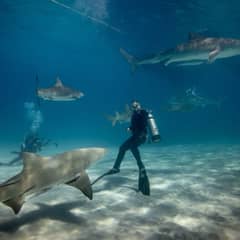
Their ink serves multiple purposes. When threatened, cuttlefish release ink that can confuse predators, though a smokescreen only does so much against hunters that track prey by scent and electrical fields, which is exactly how sharks find a meal in murky water. Some also release a “dummy” ink cloud that looks and moves like a cuttlefish, acting as a decoy while the real one escapes.
-
They can walk on their arms. Cuttlefish often use their arms to crawl along the seafloor in a walking motion. Combined with their camouflage abilities, this makes them incredibly stealthy hunters.
Cuttlefish can change their appearance so quickly and accurately that they can effectively disappear while sitting completely still in plain sight.
Watching one hypnotize prey with color on video is wild. Which fact surprised you? Tell me in the comments.
Written by Michael Ryan
Mike keeps two rescued bearded dragons, Dex and Cera, and writes the care guides on BeastlyFacts from his own research and mistakes. He is not a veterinarian.
More about Michael Ryan →Comments
No comments yet - be the first!