Siberian Husky
Canis lupus familiaris
On This Page▾
🌍 Overview
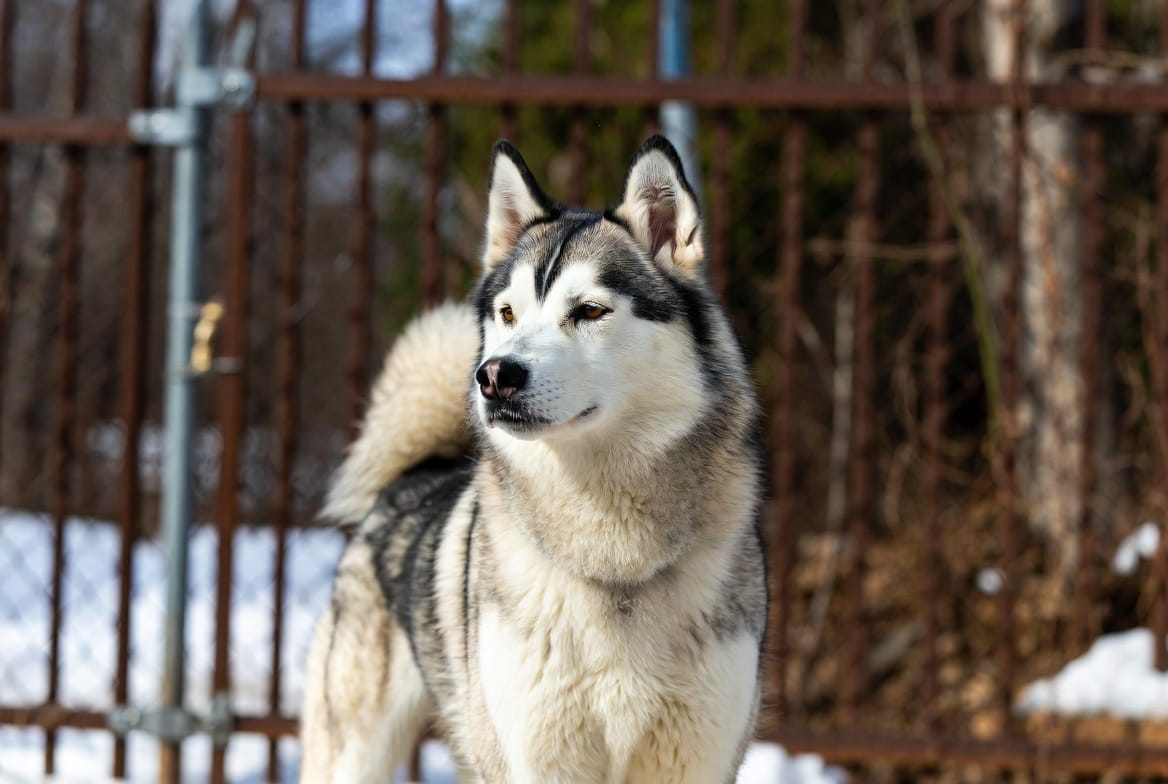
Siberian huskies were bred by the Chukchi people of northeastern Siberia over thousands of years as endurance sled dogs capable of running 100+ miles per day in sub-zero conditions on minimal food. They were introduced to Alaska during the Nome Gold Rush and became famous when a husky named Balto led a relay team carrying diphtheria antitoxin to Nome in 1925. Their wolf-like appearance, striking blue eyes and vocal howling make them one of the most recognizable breeds. The eyes are not a merle or piebald effect and are not linked to coat color at all: a genome-wide study of more than 6,000 dogs traced them to a single 98.6 kilobase duplication on chromosome 18, near the ALX4 gene, and one copy is enough, which is why a Husky can have one blue eye and one brown.
📋 Quick Facts
Native Range
Breed origin: Northeastern Siberia; bred by the Chukchi people
Natural Habitat
Fully domesticated
Adult Size
20-23.5 inches at shoulder; 35-60 lbs
Wild Diet
Fully domesticated
Wild Lifespan
12-14 years per the AKC, though UK primary-care life tables give Huskies 9.53 years on a small sample the authors flag as low confidence
Conservation Status
Not applicable (domesticated breed)
📜 History
The dogs arrived in Alaska as a long shot. The fur trader William Goosak brought a Siberian team to Nome in the fall of 1908, and bettors put them at 100 to 1 before they placed third in the 1909 All Alaska Sweepstakes. Fox Maule Ramsay sailed to Siberia in the summer of 1909 and came back with about 60 dogs; in 1910 a team of them driven by John Johnson won the 408-mile race in 74 hours, 14 minutes and 37 seconds, the fastest time it ever recorded. Leonhard Seppala took the Sweepstakes in 1915, 1916 and 1917, and in the 1925 relay his 12-year-old lead dog Togo ran 264 miles, the longest leg by a wide margin. The AKC recognized the breed in 1930.
⚖️ Compare
Siberian Husky
Human
Adult Size
20-23.5 inches at shoulder; 35-60 lbs
5-6 feet (150-185 cm); ~135-200 lbs
Wild Lifespan
12-14 years per the AKC, though UK primary-care life tables give Huskies 9.53 years on a small sample the authors flag as low confidence
~73 years (global average)
Wild Diet
Fully domesticated
Omnivorous - eats just about anything
Native Range
Breed origin: Northeastern Siberia; bred by the Chukchi people
Global - originated in Africa roughly 300,000 years ago
Natural Habitat
Fully domesticated
Everywhere from arctic tundra to tropical megacities
Conservation Status
Not applicable (domesticated breed)
Least Concern (8+ billion and counting)
🧠 Test Yourself
What's the Siberian Husky's native range?
Subscribe - it's free
New animal facts and care guides straight to your inbox. No spam. 🐾
🩺 Health and More
🐕 Dog Enrichment: Let Them Sniff, and the Dog Gets More Optimistic
🧬 What a Pet DNA Test Actually Tells You
👁️ Inherited Eye Disease: What Screening Actually Catches
🦴 Hip and Elbow Dysplasia: What the Grades Actually Mean
🐶 Why Your Dog Needs Daily Exercise (And What Happens When They Don't Get It)
🐺 The Alpha Wolf Myth: Where It Came From and What Wolves Actually Do
🤓 Did You Know?
The Siberian Husky's famous blue eyes are not a merle or piebald effect and are not linked to coat color at all. A genome-wide association study of more than 6,000 dogs traced them to a single 98.6 kilobase duplication on chromosome 18, near the ALX4 gene involved in mammalian eye development. One copy is enough to produce blue eyes or heterochromia, which is why a Husky can have one blue eye and one brown.
Explore More