Ragdoll
Felis catus
On This Page▾
🌍 Overview
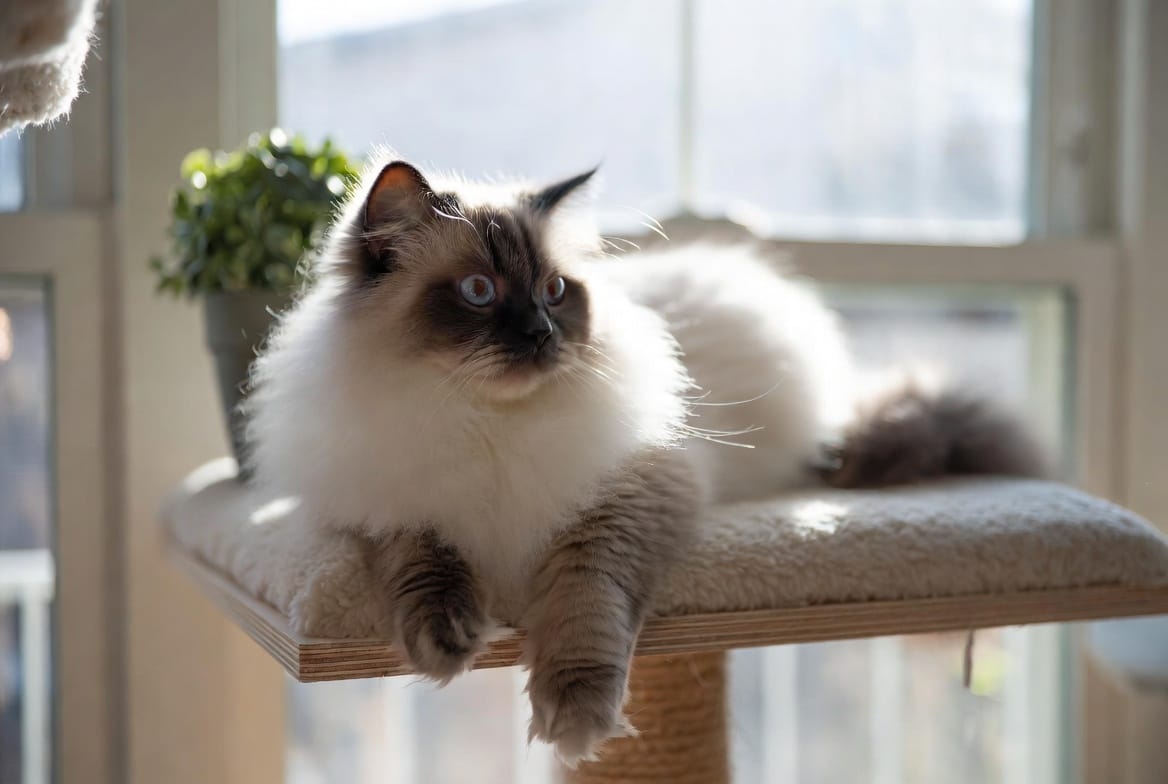
The ragdoll is a large, semi-longhaired breed developed in California in the 1960s by breeder Ann Baker, who selectively bred for an extremely docile temperament. The name comes from Baker's foundation cat Josephine, who the CFA records was so placid that she went limp when held, though the registry adds the part nobody quotes: that characteristic is uncommon in modern Ragdolls. The name outlived the trait. What did survive is the temperament: they are among the most laid-back and people-oriented cat breeds, known for following owners from room to room and being exceptionally gentle with children. They are also slow to mature, reaching full coat color at two years and full size and weight at four.
📋 Quick Facts
Native Range
Breed origin: Riverside, California, United States (1960s)
Natural Habitat
Fully domesticated
Adult Size
9-11 inches at shoulder. The CFA says it is not unusual for a mature male to reach or exceed 20 lbs, but real clinical weights run far lower: median adult male 4.97 kg (about 11 lbs) and female 3.83 kg (about 8.4 lbs) in UK practice
Wild Diet
Fully domesticated
Wild Lifespan
UK primary-care records give a median age at death of 12.85 years, against 14.0 years for UK cats overall
Conservation Status
Not applicable (domesticated breed)
📜 History
Baker did not simply breed the cats, she tried to own them. Around 1971 she set up her own registry, the International Ragdoll Cat Association, and in December 1975 she trademarked the word Ragdoll for the sale of live cats, then licensed breeders on terms she controlled. That same year Denny and Laura Dayton took a breeding pair out of the IRCA and worked instead toward recognition by the mainstream registries, and theirs is the line behind the standard used today. The CFA accepted the Ragdoll for registration in 1993 and advanced it to championship status in 2000.
⚖️ Compare
Ragdoll
Human
Adult Size
9-11 inches at shoulder. The CFA says it is not unusual for a mature male to reach or exceed 20 lbs, but real clinical weights run far lower: median adult male 4.97 kg (about 11 lbs) and female 3.83 kg (about 8.4 lbs) in UK practice
5-6 feet (150-185 cm); ~135-200 lbs
Wild Lifespan
UK primary-care records give a median age at death of 12.85 years, against 14.0 years for UK cats overall
~73 years (global average)
Wild Diet
Fully domesticated
Omnivorous - eats just about anything
Native Range
Breed origin: Riverside, California, United States (1960s)
Global - originated in Africa roughly 300,000 years ago
Natural Habitat
Fully domesticated
Everywhere from arctic tundra to tropical megacities
Conservation Status
Not applicable (domesticated breed)
Least Concern (8+ billion and counting)
🧠 Test Yourself
What's the Ragdoll's native range?
📖 Care Guide
Ragdoll: Breed Quirks Care Guide
The big, unbothered cat that follows you from room to room!
Subscribe - it's free
New animal facts and care guides straight to your inbox. No spam. 🐾
🩺 Health and More
🐈 Cat Enrichment: Five Pillars, and Most Homes Miss the Second One
🧬 What a Pet DNA Test Actually Tells You
🫘 Kidney Disease in Cats: What the Numbers Actually Mean
🫀 Cardiomyopathy in Cats and Dogs: HCM, DCM and What They Mean
⚖️ Body Condition Score: How to Tell if Your Pet Is Actually Overweight
🦷 Dental Disease: Why White Teeth Do Not Mean a Healthy Mouth
🤓 Did You Know?
The breed's own registry says the limp is mostly legend. The CFA records that Ann Baker's foundation cat Josephine was so placid that she went limp when held, then adds the part nobody quotes: that characteristic is uncommon in modern Ragdolls, but it did give rise to the name of the breed. The name outlived the trait.
Explore More