Are Sloths Legal? Legal in 27 States, Banned by Name in a Few
On This Page▾

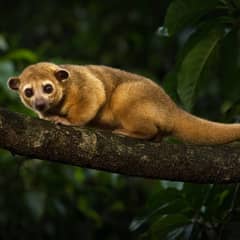
A two-toed sloth is legal in 27 jurisdictions, and in 25 of them the statute never mentions it. That is the shape of the map for a slow nocturnal animal that no legislature ever thought of as dangerous: the dangerous-animal lists name cats, bears, canids, primates and crocodilians and stop, the native-wildlife rules turn on an animal living wild in the state, and a sloth lives wild in none of them. The kinkajou is answered the same way in most of the country, by silence, and the two animals share the pet trade's nocturnal arboreal shelf for the same reason they share this map. Where a state does write the sloth down, it tends to write it down carefully, by order, family or genus, and seven of the eleven bans do exactly that.
Read across all 52 jurisdictions, that produces 27 states where no state permit is needed, 12 that issue a permit, 11 bans, one restricted list in Arizona, and one state, Pennsylvania, whose text will not decide.
The Shape of It
| Where | Status | How the line is drawn |
|---|---|---|
| California, Georgia, Hawaii, New York City | Banned | The order or the genus is named for a tier a keeper cannot reach. California restricts Xenarthra; Georgia puts Pilosa in its license tier for dealers and exhibitors; Hawaii names both sloth genera on its research-and-exhibition list; New York City bars 'All sloth and armadillo' |
| Maine, Colorado, New Hampshire | Banned | The two-toed sloth is named for exhibitors or ruled regulated. Maine's Category 1 holds Hoffmann's two-toed sloth and the other species is uncategorized; Colorado rules 'Choloepodidae spp.' regulated wildlife with no pet license; New Hampshire's table marks it for exhibitors only |
| New Mexico, Nebraska, Alaska, District of Columbia | Banned | A default closes it. New Mexico lists only the Brazilian three-toed sloth, so Choloepus is Group IV; Nebraska's closed importation list names no sloth; Alaska may not permit a game animal as a pet; the District's seven pet categories admit no sloth |
| Florida, New Jersey, Utah, Delaware, Rhode Island, Nevada | Permit | A permit a keeper can hold: Florida's free Class III permit, New Jersey's individual hobby permit, Utah's certificate of registration, Delaware's three-year Individual Permit, Rhode Island's exotic animal possession permit, Nevada's written consent to bring one in |
| Arkansas, Idaho, Wyoming, Oklahoma | Permit | Arkansas names 'Two-toed Sloths (Genus Choloepus)' on its permit list; Idaho requires a captive possession license; Wyoming's permit may be authorized, not shall; Oklahoma applies its import permit and breeder license to any exotic not on the exemption list |
| Massachusetts | Permit on paper, not for pets | A closed list with no sloth, and an agency that issues the license only for scientific, educational, commercial or other specific reasons, never for a pet |
| Vermont | Permit, at the Commissioner's discretion | A closed list with no sloth; Regulation 881 lets the Commissioner permit a keeper on finding the animal does not conflict with the regulation's purpose, with no published standard |
| Arizona | Restricted, special license | R12-4-406(F)(11) restricts 'All species of the order Xenarthra', and none of the exemptions is a pet route |
| Oregon, Montana | Legal, no permit needed | Named on an allow list. Oregon clears 'Two-toed tree sloths -- Megalonychidae -- All species'; Montana's noncontrolled list names the Linnaeus's two-toed sloth and not the Hoffmann's |
| New York, Texas, Ohio, Illinois, Maryland, Michigan, Minnesota, Louisiana, Mississippi, Tennessee | Legal, no permit needed | A closed dangerous-animal list with no sloth on it. New York's wild animal list 'includes, and is limited to' six groups; Texas's names nineteen mammals; Tennessee's Class III is everything not listed elsewhere |
| Wisconsin, Washington, Virginia, West Virginia, Iowa, Kansas, Missouri, Kentucky, South Carolina, Alabama, Indiana, Connecticut, North Dakota, South Dakota | Legal, no permit needed | The wildlife rule turns on nativity or a list, and a sloth is on neither. Connecticut's Category Two reaches the armadillos and stops; Missouri clears mammals not native to Missouri; Kansas allows exotic wildlife without limit in time and number |
| North Carolina | Legal, no permit needed | No statewide rule names a sloth, and § 153A-131 hands the question to counties, several of which have used it |
| Pennsylvania | Unclear | The catch-all on wildlife captive bred in another state arguably reaches it, and no text names it |
Banned by Name
The states that ban a sloth mostly took the trouble to say so, and they say it at four different levels of the tree. California's 14 CCR § 671(c)(2)(B) restricts "Order Xenarthra-Sloths, Anteaters, Armadillos, etc. All species", and then files the sloths under Bradypodidae with a welfare marking, the older family that held the two-toed sloths before Choloepus was split out; the order-wide "All species" reaches them either way, and no permit type covers a pet. Georgia's rule 391-4-8-.05(1)(a)14 lists "Order Pilosa (sloths, etc.) - All species" in its license tier, and O.C.G.A. § 27-5-4(b)(1) issues that license only to dealers and exhibitors; the DNR pet guide lists "Sloths, armadillos, etc.; all species" among exotics that may not be held as pets. Hawaii's Part A list, the research and exhibition tier, names both genera:
ORDER Edentata FAMILY Bradipodidae Bradypus (all species in genus) sloth, three toed Choloepus (all species in genus) sloth, two toed
A Part A animal may be brought in by a university or a licensed exhibitor under permit and may not be kept as a pet. New York City's Health Code § 161.01(b)(22) reads "All sloth and armadillo (Edentala)", the clause's own common name doing the work, with the Parks Department and Wildlife Conservation Society zoos, laboratories, veterinary facilities and permitted temporary exhibits as the only exceptions.
Three more name the two-toed sloth itself. Maine's Category 1 list carries "Choloepus hoffmanni Hoffmann's Two-toed Sloth", and a Category 1 applicant "must be an exhibitor, wildlife rehabilitator; laboratory registered with the United States Department of Agriculture, or accredited research facility"; the other two-toed sloth, Choloepus didactylus, is named nowhere in the chapter, and § 7.06(4) bars any species that has not been categorized, so neither species has a route. Colorado Parks and Wildlife rules on the family: "Choloepodidae spp. Two-toed sloths" are regulated wildlife, not on the domestic or unregulated list, and "CPW will not issue a license for private possession (eg pet) of regulated wildlife". New Hampshire's Table 800.2 lists the two-toed sloth for permittee category 5 alone, the exhibitors, so no permit can issue to an individual.
Four bans come from a default rather than a name. New Mexico's importation list names one sloth, "Sloth | Bradypodidae | Bradypus torquatus | Sloth, Brazilian three-toed | IV | Federally Endangered", and 19.35.7 NMAC says any animal not on the list "will be designated group IV", prohibited to the general public. Nebraska's importation list is closed, § 001.08A names no sloth, and a non-native animal that is not on it cannot lawfully be brought into the state except to an accredited or public zoo, the kinkajou's position exactly. Alaska's 5 AAC 92.029(c) bars a permit for any game animal "for use as a pet", and every mammal is game there. The District of Columbia's seven permitted categories run from domestic dogs to racing pigeons, and a sloth fits none.
Arizona restricts the order without quite banning it. R12-4-406(F)(11) lists "All species of the order Xenarthra. Common names include: anteaters, armadillos, and edentates, or sloths", which puts a sloth under a special license with no pet exemption.
Montana clears one two-toed sloth and not the other. ARM 12.6.2205(1)(f) puts "Two-toed sloth - Choloepus didoctylus" on the noncontrolled list, a misspelling of Linnaeus's two-toed sloth, Choloepus didactylus. Hoffmann's two-toed sloth, Choloepus hoffmanni, is named nowhere, and in a white-list state an unnamed exotic is barred. Maine runs the same split the other way, naming Hoffmann's and leaving Linnaeus's uncategorized. A buyer in either state needs the binomial on the paperwork.
The Permit States, and the Mountain West
Twelve states issue a permit, and eleven of them issue it to a keeper. Florida's is the one most keepers will meet: no sloth is on Class I or Class II or the no-permit list, so it falls to Class III, "All other wildlife not listed herein, except those for which a permit is not required pursuant to Rule 68A-6.003", and the free Permit to Possess Class III Wildlife for Personal Use, with a caging standard written for sloths at 68A-6.0128. New Jersey's subchapter 4 sweeps any exotic not on its exempt or permit lists into the general permit requirement, and the one that fits is the "Individual hobby" permit, "issued to persons holding exotic mammals, birds, reptiles or amphibians or nongame species for hobby purposes or as pets". Delaware's regulation 903 says "When an exotic is kept as a pet, the owner or custodian of the exotic must apply to the Department for an Individual Permit", per animal, for three years, once the Department is satisfied with the double enclosure. Rhode Island's exemption list has no sloth, so it is an exotic animal needing a possession permit from the Division of Agriculture, available to private persons for anything § 3.7 does not expressly prohibit. Arkansas's Addendum R1.02 names "Two-toed Sloths (Genus Choloepus)" among species for which breeding, sale and importation permits may be issued, so one may be kept if it came from a Commission-permitted breeder or dealer or in on an importation permit, with records and a veterinary certificate. Oklahoma leaves the sloth off its exemption list, so the import permit and the breeder license requirements apply, the capybara's position.
The mountain states are where the permit answer concentrates, and each gets there differently. Utah's Table 3b-1 lists among its controlled mammals:
Two-toed sloths Choloepus didactylus, Choloepus hoffmanni
A controlled mammal needs a certificate of registration before importation or possession, the bobcat's column, and a route exists. Nevada has no sloth on its prohibited list or its no-permit list, which leaves NRS 503.597: it is unlawful "except by the written consent and approval of the Department" to bring wildlife into the state, so a sloth needs that consent, and county and city ordinances are preserved. Idaho defines wildlife as animal life "native or exotic, generally living in a state of nature", lists no sloth among its conventional pets, and so requires a captive possession license from Fish and Game. Wyoming's Chapter 10 § 13(d) says a permit "may be authorized upon approval for other warm-blooded wildlife", and may is not shall. Colorado, the fifth mountain state, is the ban above, and Montana, the sixth, is the half-clearance in the box.
Massachusetts and Vermont both run closed lists with no sloth. Massachusetts has a permit on paper only, since MassWildlife says "You will not be issued a permit for keeping a wild animal as a pet". Vermont's Regulation 881 lets the Commissioner issue a permit outside science and education only on a finding that the animal "does not conflict with the purpose of this regulation", a discretionary call with no published standard.
Named and Cleared
Two states put the sloth on an allow list. Oregon's OAR 635-056-0060(1)(o)(B) reads:
(B) Two-toed tree sloths -- Megalonychidae -- All species;
so both two-toed sloths may be imported, possessed, sold and transported without an ODFW permit, under the family name current when the entry was written, and Oregon cities and counties may prohibit exotic animals by ordinance on top of state law. Montana's ARM 12.6.2205(1) opens "The following mammals are classified as noncontrolled species" and (f) is the Linnaeus's two-toed sloth, with the caveat in the box.
Legal by Silence
The other 25 clean states never mention the animal, the same silence that answers the kinkajou in most of the country, and New York is the one that surprises people. ECL § 11-0103(6)(e) says a wild animal "includes, and is limited to" six groups: primates, Felidae, Canidae, Ursidae, a named set of large constrictors and monitors plus all venomous reptiles, and Crocodylia. No sloth, and none among the dangerous animals in 6 NYCRR 180.1, so the pet bar in § 11-0512 never attaches and the state does not restrict one. New York City's Health Code is the layer that bites, and the state's silence stops at the city line. Texas's § 822.101(4) runs from "a lion" to "a gorilla" and stops. Illinois's § 48-10 names fifteen mammals and says in terms that it does not reach reptiles or amphibians; the Wildlife Code reaches only native wild birds and mammals, and a home rule city can be stricter. Ohio's § 935.01 names no sloth, and the Division of Wildlife's captivity license reaches only game, herps and fur-bearers. Maryland's § 10-621 is eight clauses, and its native-wildlife permit attaches only to "any wildlife native to Maryland". Michigan's Large Carnivore Act names cats and bears, and its Animal Industry Act asks only for a certificate of veterinary inspection to import an exotic; Part 413's prohibited species list could not be read and is the open check there. Minnesota's § 346.155 regulates cats, bears and primates, and a sloth is an unprotected wild animal outside the possession bar. Louisiana's LAC 76:V.115 is bears, wolves, primates and big cats. Mississippi's Rule 8.3 is apes, wild dogs, bears, hyenas, big cats and the largest herbivores. Tennessee's § 70-4-403(3) makes Class III the class that "requires no permits except those required by the department of agriculture, and includes all species not listed in other classes", and no other class names a sloth.
A second group clears it by nativity. Washington's RCW 77.08.010(72) defines wild animals as "those species of the class Mammalia whose members exist in Washington in a wild state", which a sloth does not. West Virginia's § 20-1-2 defines wild animals as "all mammals native to the State of West Virginia", so neither the wildlife chapter nor the importation permit reaches it. Iowa's chapter 481A reaches only wildlife "found in this state", and no sloth family is among its dangerous wild animal families. Missouri's 3 CSR 10-9.110(2) says "mammals not native to Missouri" may be "bought, sold, possessed, transported, and exhibited without permit", and no sloth is on the prohibited list. Wisconsin's § 169.04(4)(b) exempts "live nonnative wild animals that are not endangered or threatened species" from licensing, with harmful animals excepted. Kansas's K.A.R. 115-20-3 lets exotic wildlife be "possessed without limit in time and number" if legally obtained where it came from. Virginia's exotic permit table lists no xenarthran. Kentucky's 301 KAR 2:082 has no sloth on either prohibited list, so possession is lawful, a transportation permit is needed to bring one in, and a city or county may prohibit it under KRS 65.877. Connecticut's Category Two reaches "the family Dasypodidae (including, but not limited to, armadillos)", the sloths' relatives, and stops there; no sloth family appears in any of the four categories, so the regulation does not restrict one. South Carolina, Alabama, Indiana and the Dakotas reach the same place from lists that never mention a sloth, with North Dakota asking its board to review an unlisted species before importation, a review rather than a bar, and South Dakota's free entry permit covering the import.
North Carolina is legal at the state house and decided at the county seat: no statewide rule names a sloth, and G.S. § 153A-131 lets a county "regulate, restrict, or prohibit the possession or harboring of animals which are dangerous to persons or property", which several have done.
The Federal Layer, and Pennsylvania
Nothing federal reaches a two-toed sloth. The only sloth in 50 CFR 17.11 is the Brazilian three-toed sloth, which is why Wyoming's refusal of permits for federally listed species and New Mexico's "Federally Endangered" flag both attach to that animal and not to Choloepus. CITES, whatever appendix a seller mentions, is a rule about movement across a national border and not about ownership inside one, which is how federal exotic pet law treats every animal on the map.
Pennsylvania has no text that names a sloth, and it is still not a clean yes. The Game Commission's list at 58 Pa. Code § 137.1(a) ends with clause (11), "Game or wildlife held in captivity or captive bred in another state or nation", and 34 Pa.C.S. § 102 defines wild animal broadly enough that every mammal but livestock is one. The Commission uses that reading against hedgehogs and sugar gliders, neither of which any Pennsylvania text names, which is why a sloth cannot be called legal here. It stays unclear instead of banned because no text names the animal, and a Pennsylvania keeper should put the question to the Game Commission in writing before buying.
The Binomial on the Bill of Sale
In 27 states a two-toed sloth needs no state permit, almost always because no list mentions it, and 12 more want a permit first. Where the answer is yes, the city ordinance comes next, since IL, KY, MD, NV and OR all leave local governments room to prohibit what the state allows. The species name matters as much as the state: Montana's allow list clears only Linnaeus's two-toed sloth, so the binomial belongs on the bill of sale. The interactive map of sloth laws shows the rule behind each state.
Sources & Further Reading
Last reviewed 1 Nov 2026 · 5 sources
- New York City Health Code § 161.01, Wild and other animals prohibited (official PDF, downloads)
- Hawaii Administrative Rules § 4-71-6.5, List of Restricted Animals, Part A (HDOA official PDF, downloads)
- OAR 635-056-0060, Noncontrolled Species (Oregon Secretary of State)
- Administrative Rules of Montana, Subchapter 12.6.22, Exotic Wildlife
- Utah DWR Bird and Mammal Classification Table 3b-1 (official PDF, downloads)
Frequently Asked Questions
Can you own a sloth in Florida?
Yes, with a free permit. No sloth is on Florida's Class I or Class II lists or on the no-permit list, so it falls to Class III, 'All other wildlife not listed herein', and the no-cost Permit to Possess Class III Wildlife for Personal Use under 68A-6.003(8). Sloths have their own caging standard at 68A-6.0128, which the permit holder has to meet.
Is it legal to own a sloth in Texas?
Yes, with no state permit. Texas's dangerous wild animal list at Health and Safety Code § 822.101(4) is a closed list of nineteen named mammals and their hybrids, from the lion to the gorilla, and no sloth is on it. Nothing in the Parks and Wildlife Code reaches a nonnative mammal of this kind. Cities and counties were not checked.
Are sloths legal in California?
No. 14 CCR § 671(c)(2)(B) restricts 'Order Xenarthra-Sloths, Anteaters, Armadillos, etc. All species', and files sloths under Bradypodidae with a welfare marking. The order-wide 'All species' reaches the two-toed sloths whatever family they are now placed in, and no permit type covers pet keeping.
Can you have a pet sloth in New York?
In the state, yes; in the city, no. ECL § 11-0103(6)(e) defines wild animal with the words 'includes, and is limited to', the list names no sloth, and none is among the dangerous animals in 6 NYCRR 180.1, so the state does not restrict one. New York City's Health Code § 161.01(b)(22) bars 'All sloth and armadillo (Edentala)'.
Which states ban sloths by name?
Seven jurisdictions, at some taxonomic level: CA, CO, GA, HI, ME, NH and NYC. California restricts the order Xenarthra, Georgia the order Pilosa, Hawaii names both genera, New York City bars 'All sloth and armadillo', and the other three name the two-toed sloth for exhibitors only or as regulated wildlife. Arizona restricts the order without quite banning it.
Do I need a permit for a sloth in Utah, Idaho or Wyoming?
Yes, in all three. Utah names both two-toed sloths as controlled mammals, so a certificate of registration comes before importation or possession. Idaho requires a captive possession license for any wildlife that is not a conventional pet. Wyoming's permit for other warm-blooded wildlife 'may be authorized upon approval', which is discretionary. Montana, by contrast, clears the Linnaeus's two-toed sloth on its noncontrolled list and names no Hoffmann's.
Is a sloth protected under federal law?
Not a two-toed sloth. The federal endangered list at 50 CFR 17.11 carries one sloth, the Brazilian three-toed sloth, so the federal-list rules in Wyoming and New Mexico reach that species and leave Choloepus alone. A CITES listing, whichever appendix a seller cites, governs crossing a national border, not keeping the animal once it is here.
Where is a sloth legal with no permit at all?
Twenty-seven states on the text: AL, CT, IA, IL, IN, KS, KY, LA, MD, MI, MN, MO, MS, MT, NC, ND, NY, OH, OR, SC, SD, TN, TX, VA, WA, WI and WV. Oregon and Montana name it on an allow list; the rest never mention it. Kentucky still needs a transportation permit to bring one in, and local ordinances were not checked anywhere.

Written by Michael Ryan
Mike keeps two rescued bearded dragons, Dex and Cera, and writes the care guides on BeastlyFacts from his own research and mistakes. He is not a veterinarian.
More about Michael Ryan →