Are Marmosets Legal? The Finger Monkey and the Family Line
On This Page▾

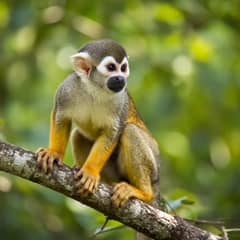
The marmoset is the primate most people meet as a price. "Finger monkey" is a sale name, not a species, and the ads that use it are selling a marmoset, usually the pygmy or the common marmoset, an animal that sits on a finger as a juvenile and will not as an adult. The statutes never use the phrase. They reach the animal through the order Primates, through its family, Callitrichidae, or through its own name, and in a few states through a family name it may or may not belong to. That last case is where a marmoset gets a different answer from the capuchin that shares its shelf.
Read across all 52 jurisdictions, the common marmoset is banned in 27, a permit animal in nine, restricted in one, unclear in two and unregulated at state level in 13. Forty jurisdictions restrict the order Primates by name, and a rule that says "all nonhuman primates" gives a four-ounce marmoset the same answer it gives a gorilla, and the CDC import rule sits underneath all forty. This page is for the places where a statute looked at the marmoset itself, or at its family, and for the two states where that look produced no answer.
The Shape of It
Every jurisdiction below either names the marmoset or its family, or draws its line in a way that lands on it. The rest give it the primate answer and are listed further down.
| Where | Status | How the marmoset is named |
|---|---|---|
| Maryland, Minnesota, Iowa, Connecticut | Banned | The marmoset is named in the ban. Maryland's § 10-621(b)(1)(vii) lists it between the orangutan and the loris, Minnesota's § 346.155 names marmosets among regulated animals, Iowa's § 717F.1(5)(a)(7) names them and their family, Connecticut's § 26-55-6(a)(3)(B)(iii) names it last among its Category Two examples |
| Hawaii, Montana, New Mexico | Banned | The family is named. Hawaii's Part B lists 'Callithricidae (all species in family)' and withdraws every primate from private use, Montana's ARM 12.6.2215(4)(f) lists 'Callitrichidae Family (Marmosets and Tamarins)' as prohibited, New Mexico's importation list files 'Callitrichidae all species' in Group IV |
| New Hampshire | Banned | Table 800.2 carries 'Marmoset (Tamarin)' on its primate row, against a guenon genus, and marks it for permittee category 5, the exhibitor category, with no category for an individual |
| California | Banned | Every nonhuman primate is restricted under § 671(c)(2)(A), and the caging standards in the same section name marmosets among the species that must be given nest boxes |
| West Virginia | Banned | C.S.R. § 74-1-3.1.o lists nonhuman primates and then excludes eight tamarins and Goeldi's monkey by name. No marmoset is excluded, so the marmoset stays on the list and its cousins come off |
| New Jersey | Unclear | The potentially dangerous table at 7:25-4.8(a) names 'Cebidae--New World Monkeys' and no Callitrichidae. If a marmoset is a cebid it has no pet route; if not, it takes the individual hobby permit at 4.6(a)1 |
| Ohio | Unclear | R.C. 935.041 names 'Pygmy, white-tufted-ear, silvery, and black-pencilled marmosets' for registration, while R.C. 935.01(C)(19) makes every nonhuman primate but lemurs and a list that omits them a dangerous wild animal nobody may acquire |
| Florida | Permit | Callithrix is on neither primate list, so Class III under 68A-6.002(1)(c). The Permit to Possess Class III Wildlife for Personal Use costs nothing |
| Arkansas | Permit | Addendum R1.02 lists 'Common Marmoset (Callithrix jacchus)' by binomial among species a permitted breeder or importer may supply; the owner registers with the county sheriff within 30 days |
| Idaho | Permit | IDAPA 02.04.27.407 exempts 'Marmoset (Saimiri spp)' and 'Squirrel Monkeys (Callithrix, Cebuella, Callibella, and Mico spp)' from the AZA-only rule, with the genera swapped, so the common marmoset is exempt twice over and needs a Fish and Game captive possession license |
| Missouri | Permit, by registration | RSMo § 578.023 names 'nonhuman primate' on its dangerous wild animal list, so a marmoset must be registered with county law enforcement; it is not federally endangered, so no Wildlife Code permit applies |
| Texas | Legal | Health and Safety Code § 822.101(4) names four primates, 'a baboon; a chimpanzee; an orangutan; a gorilla', and stops. A marmoset needs no state certificate; the city or county ordinance decides |
| Nevada, Oklahoma | Legal | Named to be cleared. Nevada's NAC 503.140(1)(m) lists 'Monkeys and other primates' among animals needing no permit; Oklahoma's exemption list ends on '(37) Primates' |
The Family Name Does the Work
A marmoset is a callitrichid, and the family name is how the strictest states catch it without ever writing "marmoset". Hawaii's Restricted List Part B names "Callithricidae (all species in family)" on the line above the Cebidae, and then § 4-71-6.5(b)(3) withdraws the private and commercial use that Part B normally allows from every primate, leaving research, government zoos, approved institutions and nonprofit primate sanctuaries. Montana's ARM 12.6.2215(4)(f) lists "Callitrichidae Family (Marmosets and Tamarins)" among prohibited mammals, one line before the Cebidae at (4)(g), so Montana bans the marmoset and the capuchin by separate sentences. New Mexico's Director's Species Importation List carries a row reading "Callitrichidae all species | Marmoset | IV", and Group IV is closed to the general public. Iowa's definition of a dangerous wild animal names "callitrichiadae" first among its thirteen primate families, spelling and all, and then names marmosets first among its examples.
Four states wrote the animal's own name into a ban. Maryland's Criminal Law § 10-621(b)(1)(vii) bars a live "nonhuman primate, including a lemur, monkey, chimpanzee, gorilla, orangutan, marmoset, loris, or tamarin". Minnesota's § 346.155 names marmosets among its regulated animals and closed possession of every one of them on January 1, 2005. Connecticut's § 26-55-6(a)(3)(B)(iii) reaches "A member within the order Primate (including, but not limited to, capuchin, macaque, lemur and marmoset)", and subsection (b)(3) allows a Category Two animal only to vets, zoos, museums, exhibitors and laboratories, with a registered animal held on October 1, 2003, as the one grandfathered case. New Hampshire's Table 800.2 lists "Marmoset (Tamarin) Cercopihecus spp." on its primate row, against a genus that belongs to the guenons; the name is a marmoset's, the genus is not, and either way the row is marked for permittee category 5, the exhibitor category, so no permit can issue to an individual.
West Virginia is the state that read the family most carefully and still caught the marmoset. C.S.R. § 74-1-3.1.o puts "Nonhuman primates" on the Dangerous Wild Animal list and then excludes, at 3.1.o.2, "Golden lion, black faced lion, golden-rumped lion, cotton top, emperor, saddlebacked, blackmantled, and Geoffroys tamarins", with Goeldi's monkey in a later exclusion. Those are the marmoset's closest relatives, every one of them a callitrichid, and the board took them off the list one by one. It took no marmoset off. A common marmoset in West Virginia is a dangerous wild animal, and the only permit under § 19-34-4(b) is for someone who lawfully had one before the rules took effect in 2022.
New Jersey Named the Wrong Family
New Jersey is the one state where the marmoset's taxonomy decides the answer, and the state has not said which taxonomy it uses. A permit is needed in any case: N.J.A.C. 7:25-4.2(a) bars possessing any exotic mammal without one, and 4.5 sweeps every unlisted animal into the requirement. The question is which permit. The potentially dangerous species table at 7:25-4.8(a) opens its primate section with "Cebidae--New World Monkeys", followed by the Old World monkeys and the apes, and 4.9(a)3 says of every animal on that table:
The potentially dangerous species shall not be kept as a pet, for hobby purposes or in situations, which, in the judgment of the Department, could adversely affect the health of the animal or which could constitute a hazard to the public.
When that table was written the marmosets and tamarins were their own family, Callitrichidae, and a marmoset was not a cebid. Most current classifications fold the callitrichids into Cebidae as a subfamily, and on that reading a marmoset is a New World monkey of the family Cebidae and has no pet route. The table is also open-ended, "including, but not limited to the following", and it defines a potentially dangerous species by the Division's opinion rather than by the list alone. Read the old way, a marmoset is an exotic mammal on no table and takes the individual hobby permit at 4.6(a)1, the permit New Jersey issues for a kinkajou or a fennec fox. Read the new way, it is banned with the capuchin and squirrel monkey. The map records New Jersey as unclear rather than guess, and the Division's permit desk is the only place the answer lives.
Ohio Named Four Marmosets and Did Not Say Why
Ohio is the other gray cell, and the problem is the opposite one: the marmoset's name is in the statute, and that makes the law harder to read. R.C. 935.01(C)(19) defines a dangerous wild animal to include "Nonhuman primates other than lemurs and the nonhuman primates specified in division (C)(20) of this section", and (C)(20) is a list of eight tamarins, night monkeys, titis, muriquis, Goeldi's monkeys, sakis, uakaris, spider monkeys, woolly monkeys and howlers. No marmoset is on it. Read alone, that makes every marmoset a dangerous wild animal, and § 935.02 says no person may acquire one on or after the act's effective date or possess one on or after January 1, 2014, without a permit that only 2012 registrants could apply for. But the same bill enacted R.C. 935.041:
A person that possesses any of the following animals shall register the animal in the same manner as provided in section 935.04 of the Revised Code: (A) Pygmy, white-tufted-ear, silvery, and black-pencilled marmosets; (B) Squirrel monkeys; (C) Brown, white-faced, weeping, and white-fronted capuchins; (D) Lemurs.
The white-tufted-ear marmoset is the common marmoset, Callithrix jacchus, and the pygmy marmoset is the finger monkey of the ads. Ohio wrote both names into a registration section, and a registration section for animals the chapter elsewhere bars outright only makes sense if those animals are not dangerous wild animals. The two sections cannot both be read at full strength. The likelier reading is that § 935.041 works the way it plainly reads for the lemur, which (C)(19) writes out in terms, and that the four marmosets were meant to be small primates Ohio decided to register rather than ban. But a keeper who buys on that reading and meets an inspector who holds the other one has a felony-grade problem, so write to the Department of Agriculture, ask which section governs a newly acquired marmoset, and keep the answer.
Idaho exempted the marmoset from its zoo-only rule twice, by accident. IDAPA 02.04.27.407 says "All non-human primates must be possessed on a facility that is AZA accredited" and then exempts "02. Marmoset (Saimiri spp)" and "04. Squirrel Monkeys (Callithrix, Cebuella, Callibella, and Mico spp)". Saimiri is the squirrel monkey genus and Callithrix is the marmoset genus, so the rule filed each animal's name against the other's genus. The common marmoset is exempt by name under .02 and by genus under .04, and the squirrel monkey is exempt the same way in reverse. Both still need a Fish and Game captive possession license, because the conventional pets list has no primate on it.
Why the Lemur Is Listed and the Marmoset Is Not
The question matters because three states decide a primate's answer by pointing at the federal endangered list. 50 CFR 17.11 lists "Lemurs | Lemuridae" as endangered wherever found, the whole family in one row, which is why a ring-tailed lemur is barred in Missouri, South Carolina and New Jersey by reference to that list. The common marmoset is not on it. The federal list names a few Atlantic forest marmosets and tamarins by species, animals with small wild ranges, and Callithrix jacchus, the abundant northeastern Brazilian species behind the laboratory colonies and the pet trade, is not among them. CITES places it on Appendix II rather than Appendix I, which bars nothing at the border that the CDC rule has not already barred.
So Missouri clears the marmoset and bars the lemur with one sentence. 3 CSR 10-9.110(2) lets nonnative mammals be possessed without a Wildlife Code permit "Except for federally-designated endangered species", which takes the lemur out of the free pass and leaves the marmoset in it. What the marmoset owes Missouri is the county registration that RSMo § 578.023 requires of anyone who keeps a "nonhuman primate", an offense to skip and nothing more. South Carolina's § 50-15-30(C)(3) bars possessing anything on the federal list of endangered foreign wildlife, which catches the lemur, while the 2018 ban reaches primates only through the great apes, so a marmoset in South Carolina needs nothing from the state.
The Permits
Nine jurisdictions issue a permit, and eight of them issue it to a private keeper. Florida's is the one most people will use. The captive wildlife rule writes its primate classes genus by genus, Class I for the great apes, gibbons, baboons and drills, Class II for howlers, uakaris, mangabeys, guenons, patas and vervet monkeys, sakis, colobus, indris, macaques and langurs, and Callithrix is on neither, so 68A-6.002(1)(c) catches it with its closing clause, "Class III: All other wildlife not listed herein". 68A-6.003(8) then says that "Persons possessing Class III wildlife as personal use wildlife shall obtain a no-cost permit from the Executive Director", and primates have their own caging standard at 68A-6.0121.
Arkansas names the species by binomial. Addendum R1.02 says permits "for breeding, sale, and importation may be issued for the following species", and the mammal list carries "Common Marmoset (Callithrix jacchus)", so a marmoset may be kept if it came from a Commission-permitted breeder or dealer or in on an importation permit. Code 09.02(H) then sends the owner to Ark. Code Ann. §§ 20-19-601 to 20-19-610, which bar only apes, baboons and macaques, and § 20-19-605 requires the owner to register the animal with the county sheriff within 30 days, with no outdoor tethering and no public contact under § 20-19-602. Idaho's exemption is above. Delaware's regulation 903 writes the Individual Permit for "an exotic ... kept as a pet", per animal for three years, South Dakota's possession permit covers the whole order at ten dollars an animal, and North Dakota licenses and inspects before the animal arrives.
Massachusetts has the permit on paper only: MassWildlife says "You will not be issued a permit for keeping a wild animal as a pet". Vermont's Regulation 881 lets the Commissioner issue a permit outside science and education only on a finding that the animal "does not conflict with the purpose of this regulation", a discretionary call with no published standard. Arizona is restricted rather than permitted, with "All nonhuman primates" held only under a special license that has no pet exemption.
Where the Order Is the Rule
The other 17 jurisdictions that ban a marmoset do it with a sentence that never needed to know the species. Pennsylvania prohibits "The order Primates. All families of nonhuman primates." Wyoming says a permit "shall not be issued" for "All members of the order nonhuman primates". Utah, Colorado, Maine, Rhode Island, Alaska, Nebraska, the District of Columbia and New York City reach the same answer by a closed list, a research-only tier or an import list with no primate on it. Georgia licenses primates only to the wild animal trade and exhibitors, and New York bars every nonhuman primate as a wild animal that may not be kept as a pet. Oregon, Washington, Illinois, Kentucky and Louisiana ban with a grandfather window that closed between 1995 and 2011 and lets no new animal in. In every one of them the marmoset's answer is the primate order's answer, the same sentence and closing date that decide any pet monkey there.
The Thirteen With No Rule
Wisconsin, Texas, Michigan, Nevada, Virginia, Tennessee, North Carolina, Kansas, South Carolina, Alabama, Indiana, Mississippi and Oklahoma restrict a marmoset nowhere in their state law. Texas is the clearest, because its list is closed and short: the primates on Health and Safety Code § 822.101(4) are "(P) a baboon; (Q) a chimpanzee; (R) an orangutan; (S) a gorilla", so the certificate of registration and the $100,000 of insurance never attach to a marmoset. Tennessee sends "Primates not otherwise listed" to Class III, which needs no wildlife permit, and Mississippi's inherently dangerous list stops at the apes, macaques, baboons and the gelada. Nevada and Oklahoma name primates to clear them. Virginia, Alabama and Indiana list carnivores, rodents and reptiles and nothing with hands, Kansas lets lawfully obtained exotic wildlife be possessed "without limit in time and number", Wisconsin frees every nonnative wild animal that is not harmful, Michigan's Large Carnivore Act names cats and bears, and North Carolina hands dangerous animals to its counties under § 153A-131.
Thirteen states with no rule is not thirteen states where a finger monkey is safe to buy. Primates appear on municipal exotic animal lists more often than almost any other pet, and Texas and Nevada both say in terms that a city or county may prohibit what the state does not. The federal rule sits under all of it: since 1975 no primate may be imported for the pet trade, so every marmoset sold lawfully in the country was bred here.
The Family Name Behind the Finger Monkey
No statute says finger monkey. The marmoset's answer comes from the order Primates, from its family Callitrichidae or from its own name, and that leaves it banned in 27 jurisdictions and a permit animal in nine. NJ and OH are the two the text cannot settle, one because it named a family the marmoset may or may not belong to, the other because it named four marmosets for registration beside a definition that bars them. The interactive map of marmoset laws shows the rule behind each state, and in those two the agency's written answer is the one to keep.
Sources & Further Reading
Last reviewed 1 Nov 2026 · 5 sources
- 68A-6.002, 68A-6.003 and 68A-6.004, F.A.C., Captive Wildlife (Florida Administrative Rules)
- N.J.A.C. 7:25 Subchapter 4, Endangered, Nongame and Exotic Wildlife (NJDEP) (PDF, downloads)
- Ohio Rev. Code §§ 935.02 to 935.101, Dangerous Wild Animals and Restricted Snakes: possession, registration and permits
- Arkansas Game and Fish Commission Code Book, Addendum R1.02, captive wildlife permit species list (PDF, downloads)
- IDAPA 02.04.27, Rules Governing Deleterious Exotic Animals (Idaho Department of Agriculture) (PDF, downloads)
Frequently Asked Questions
Are finger monkeys legal?
A finger monkey is a marmoset, usually the pygmy or the common marmoset, and the answer is the marmoset's. Across 52 jurisdictions the common marmoset is banned in 27, a permit animal in nine, unregulated at state level in 13, restricted in Arizona and unclear in NJ and OH. A statute that says 'all nonhuman primates' or 'Callitrichidae' reaches a four-ounce marmoset the same way it reaches a baboon.
Is it legal to own a marmoset in Florida?
Yes, with a free permit. Florida writes its primate classes genus by genus, and Callithrix is on neither the Class I nor the Class II list, so 68A-6.002(1)(c) sends it to Class III, 'All other wildlife not listed herein'. A Permit to Possess Class III Wildlife for Personal Use costs nothing, and primates have their own caging standard at 68A-6.0121.
Can you own a marmoset in Texas?
At state level, yes, with no permit. Health and Safety Code § 822.101(4) lists only four primates, 'a baboon; a chimpanzee; an orangutan; a gorilla', so a marmoset needs no certificate of registration or insurance, and the Parks and Wildlife Code does not reach a nonnative primate. Texas cities and counties regulate primates far more often than the state does, so read the local ordinance before buying.
Is a marmoset legal in California?
No. 14 CCR § 671(c)(2)(A) restricts 'Order Primates-Monkeys, Apes: All species' and carves out only humans. The caging standards in the same section name marmosets among the species that must be given nest boxes, so the department has them in view, but no California permit type covers keeping one as a pet; the only possession permit, Animal Care, requires lawful possession in the state before January 1992.
Are marmosets legal in New Jersey?
A permit is needed; which one is the open question. The potentially dangerous species table at 7:25-4.8(a) names 'Cebidae--New World Monkeys', and those may not be pets. Marmosets were their own family, Callitrichidae, when the table was written and are now generally placed inside Cebidae. Read the first way, a marmoset takes the individual hobby permit; read the second, it has no pet route.
Are marmosets legal in Ohio?
Unclear, because the statute points two ways. R.C. 935.01(C)(19) makes every nonhuman primate but lemurs and a named list a dangerous wild animal, and the list has no marmoset. But R.C. 935.041, from the same bill, requires registering 'Pygmy, white-tufted-ear, silvery, and black-pencilled marmosets', and the white-tufted-ear marmoset is the common one. Ask the Department of Agriculture in writing.
Is the common marmoset an endangered species?
Not under federal law. 50 CFR 17.11 lists the whole family Lemuridae as endangered, which is why a ring-tailed lemur is barred in MO, NJ and SC by reference to that list, but the common marmoset, Callithrix jacchus, is not on it. That is why Missouri's free pass for nonnative mammals, which excludes federally endangered species, clears the marmoset and not the lemur.
Is it legal to own a marmoset in New York?
No. ECL § 11-0103(6)(e)(1) makes 'Nonhuman primates and prosimians' wild animals, and § 11-0512 bars keeping a wild animal as a pet. Its only primate exception covers a trained assistance monkey for a person paralyzed from the neck down. New York City bans every nonhuman primate separately under Health Code § 161.01(b)(8).

Written by Michael Ryan
Mike keeps two rescued bearded dragons, Dex and Cera, and writes the care guides on BeastlyFacts from his own research and mistakes. He is not a veterinarian.
More about Michael Ryan →